Redefined ENSO May Extend La Nina Conditions Beyond Spring Barrier: El Nino Likely During Monsoon

Key Takeaways:
- ENSO-neutral conditions are likely to dominate through early summer 2026 before a possible transition toward El Niño.
- CPC-NOAA indicates a 62% probability of El Niño developing during June–August 2026.
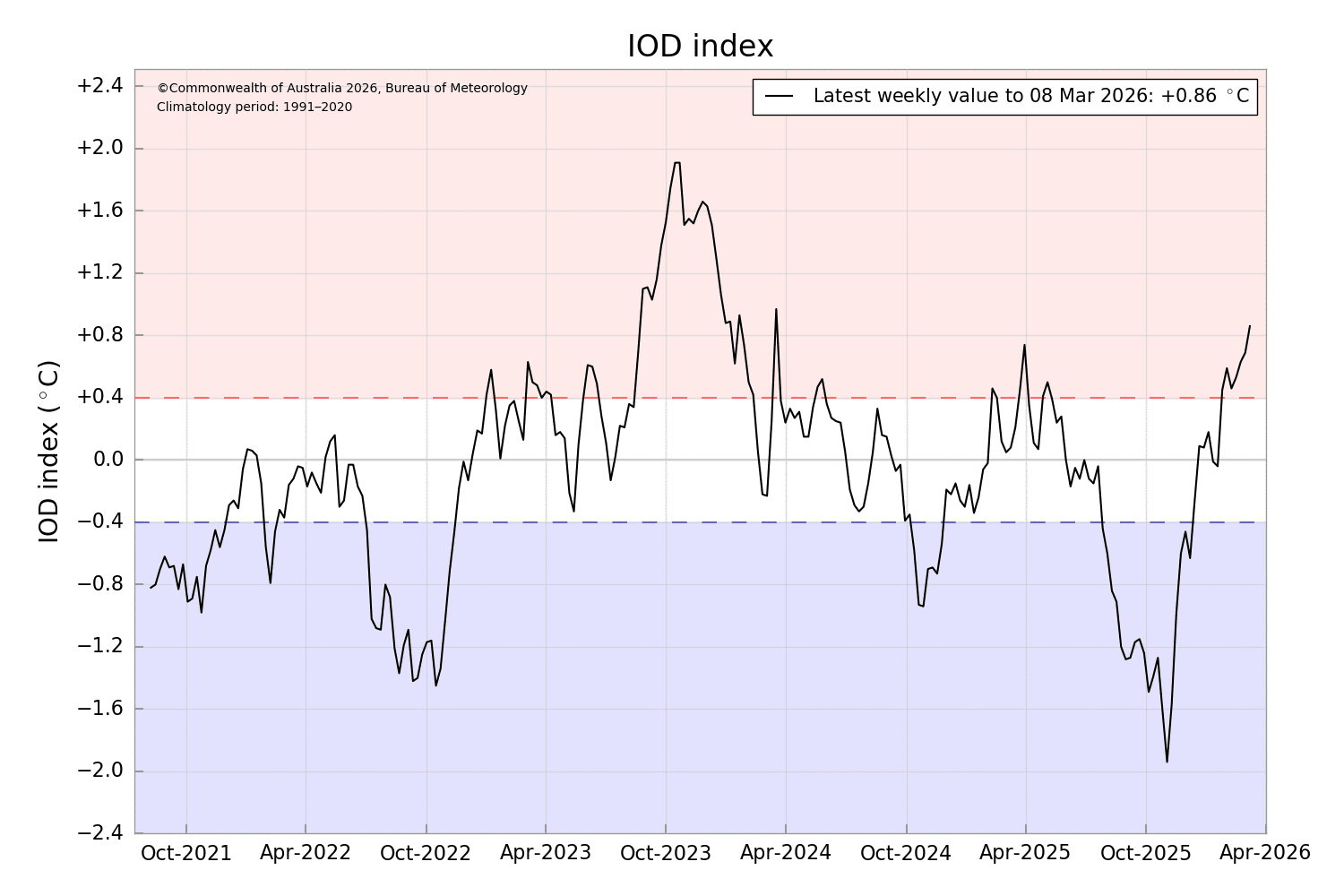
- The Indian Ocean Dipole has remained above the positive threshold for seven consecutive weeks.
- MJO activity during March is expected to remain weak and largely inconsequential for storm development over Indian seas.
Advertisement
The ENSO phase in the Pacific Ocean has a strong correlation with the Indian Summer Monsoon Rainfall (ISMR). It is believed and proven as well that year-to-year variability of the ISMR gets primarily influenced by the state of ENSO, more so during El Niño conditions. One of the most widely used Oceanic Niño indices has recently been modified and developed as the Relative Oceanic Niño Index (RONI).
Advertisement
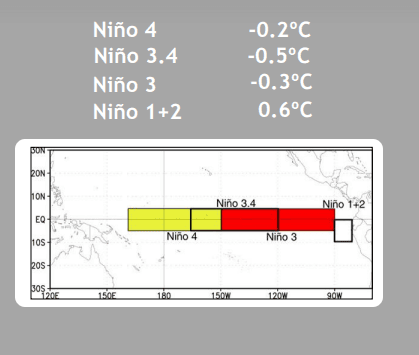
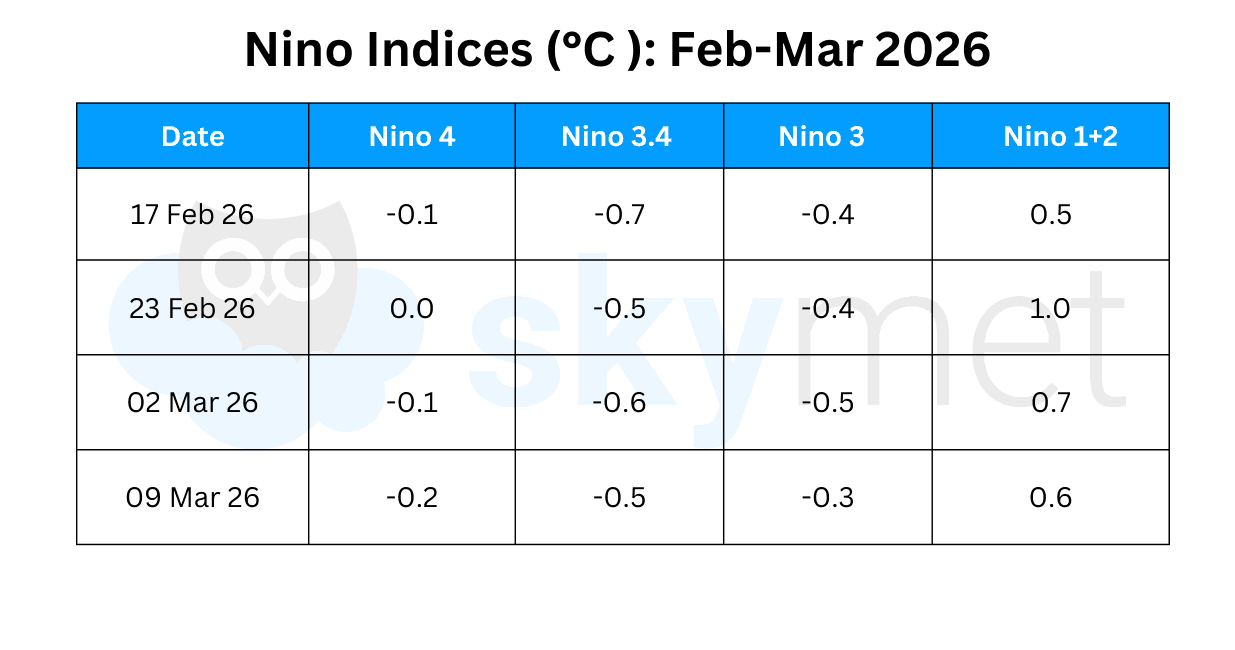
Suitability of the new index vis-à-vis the old one is yet to be established for monitoring ENSO and for explaining ISMR variability, more so when the oceans around the globe are getting warmer than earlier times. It is not only the SST-based oceanic indices; the atmospheric linkages also play a crucial role. The two together are considered a more reliable and operationally best option for ENSO monitoring and connecting with the ISMR variability.
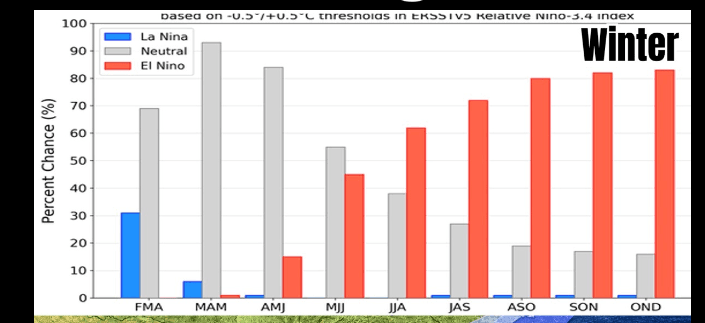
ENSO: Under the old regime of Niño indices, the probability of La Niña was shrinking and was placed at just 4% for the quarter Feb–Mar–Apr 2026. The odds were shifting in favour of ENSO-neutral conditions (about 96%) for the same period. ENSO-neutral remained the dominant category through Mar–May (90%) and Apr–Jun (65%), while El Niño probability increased rapidly during the same period. El Niño probabilities started gaining edge over ENSO-neutral, albeit with a slender margin, from the quarter May–Jul 2026. As per the latest update from CPC-NOAA, there is a 62% chance that El Niño will emerge during Jun–Aug 2026, likely persisting through the rest of the year. However, caution needs to be exercised as long-range forecasts made during spring (the spring predictability barrier) have lesser reliability.
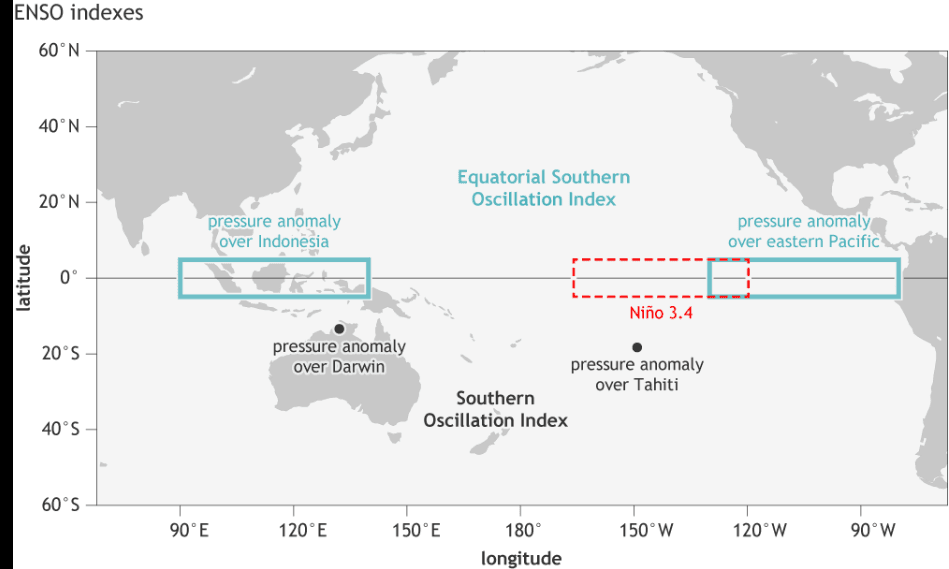
Like the redefined ONI, a similar attempt was made to replace the traditional Tahiti-Darwin Southern Oscillation Index (which is based on land-based station pressure) with the Equatorial Southern Oscillation Index. The EQSOI is a climate metric measuring the difference in atmospheric pressure between the eastern (5°N–5°S, 80°W–130°W) and western (5°N–5°S, 90°E–140°E) tropical Pacific. It tracks the strength of Walker circulation, with low or negative values signaling El Niño (weakened winds) and high positive values indicating La Niña. The EQSOI relies on sea level pressure (SLP) anomalies directly over the equatorial Pacific Ocean, better capturing the atmospheric component of ENSO. The EQSOI often correlates more strongly with Niño 3.4 sea surface temperature anomalies and wind bursts than the traditional SOI, making it a more effective indicator of tropical coupling.
Advertisement
IOD: The Indian Ocean Dipole continues to hold positive values above the threshold mark of +0.4°C for seven consecutive weeks. The index value is on the rise for the last five weeks. The latest value of the IOD index for the week ending 09 March 2026 was +0.86°C, the highest since 31 March 2026. Another one week of positive value above the threshold mark will lead to a positive IOD event early in the season. The numerical models favour neutral conditions to dominate through the outlook period of summer, while positive IOD emerges as the next most probable scenario. Courtesy of the dynamics of monsoon circulation, the IOD index often turns neutral at the start of the monsoon season.
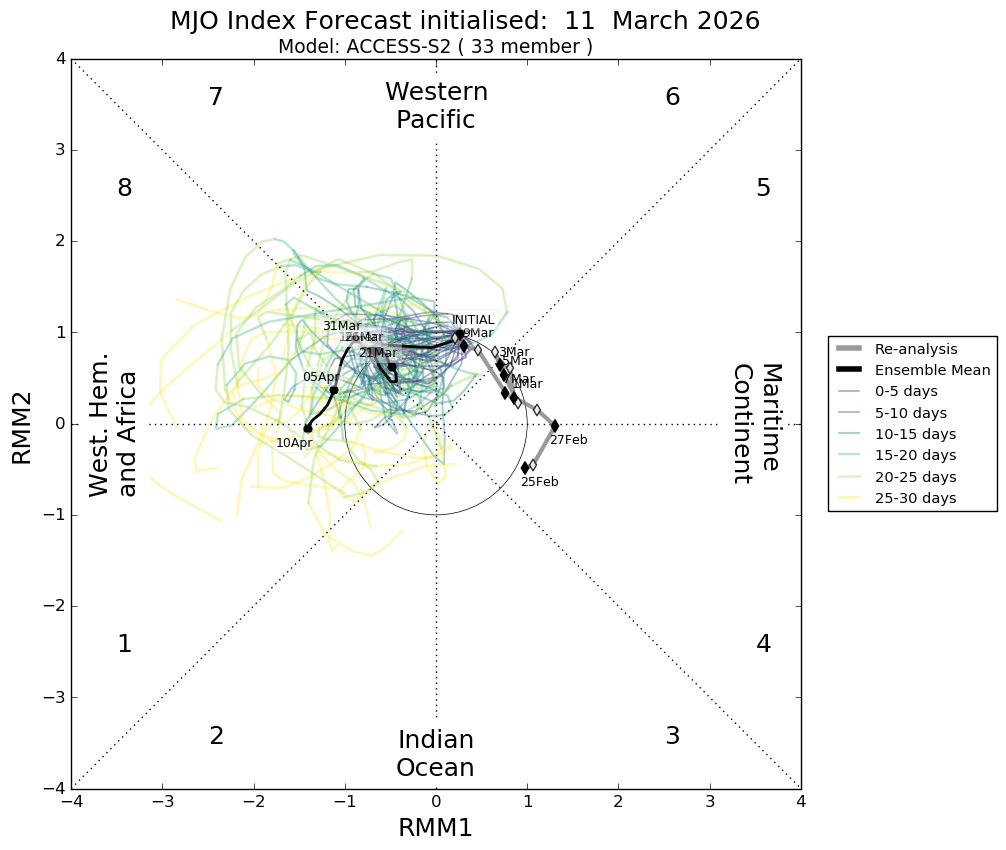
MJO: The Madden-Julian Oscillation is the largest element of the intra-seasonal (30–90 day) variability in the tropical atmosphere. It is a large-scale coupling between atmospheric circulation and tropical deep convection. Unlike ENSO and IOD, being static patterns, the MJO is a travelling pulse propagating eastward at approximately 4–8 m/s through the atmosphere over the warm parts of the Indian and Pacific Oceans. The MJO index is likely to meander over the Western Pacific without growing in magnitude during the month of March 2026. It may make an exit in early April from that region. It is likely to remain inconsequential for any stormy activity over the Indian seas.
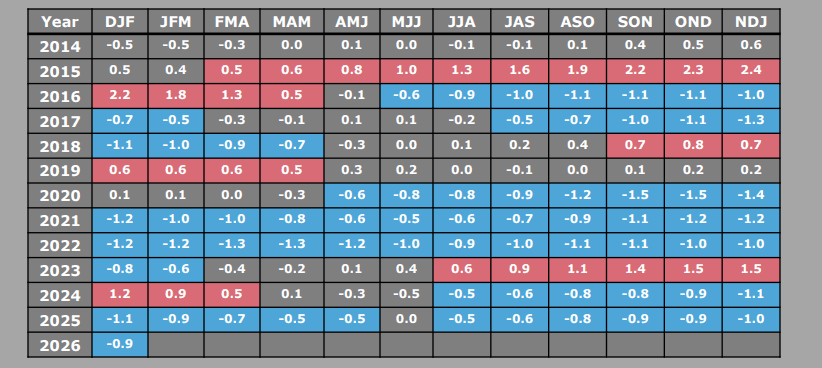
With the redefined ONI (RONI), the La Niña conditions are likely to extend beyond March. Later, the transition into ENSO-neutral conditions is expected by April. The near-term forecast suggests ENSO-neutral, with a 55–70% chance, through May–Jul 2026. There is a fair amount of chance that El Niño will emerge a little early during the monsoon period. If developed, this could impact global weather patterns, potentially affecting the Indian monsoon.