2025 Set to Be Second or Third Warmest Year on Record: WMO, But Why?

Key Takeaways
- 2025 is likely to rank as the second or third warmest year ever recorded globally.
- Rising greenhouse gases and record ocean heat are driving long-term warming trends.
- Arctic and Antarctic sea ice, glaciers, and sea levels continue to show alarming changes.
- Extreme weather events in 2025 caused major social and economic disruption worldwide.
Advertisement
The year 2025 is on track to become either the second or third warmest year ever recorded, continuing an extraordinary streak of global warming, according to the World Meteorological Organization (WMO).
Advertisement
The update, released ahead of COP30 in Brazil, highlights how rising greenhouse gas concentrations and ocean heat are pushing the Earth’s climate system into increasingly dangerous territory.
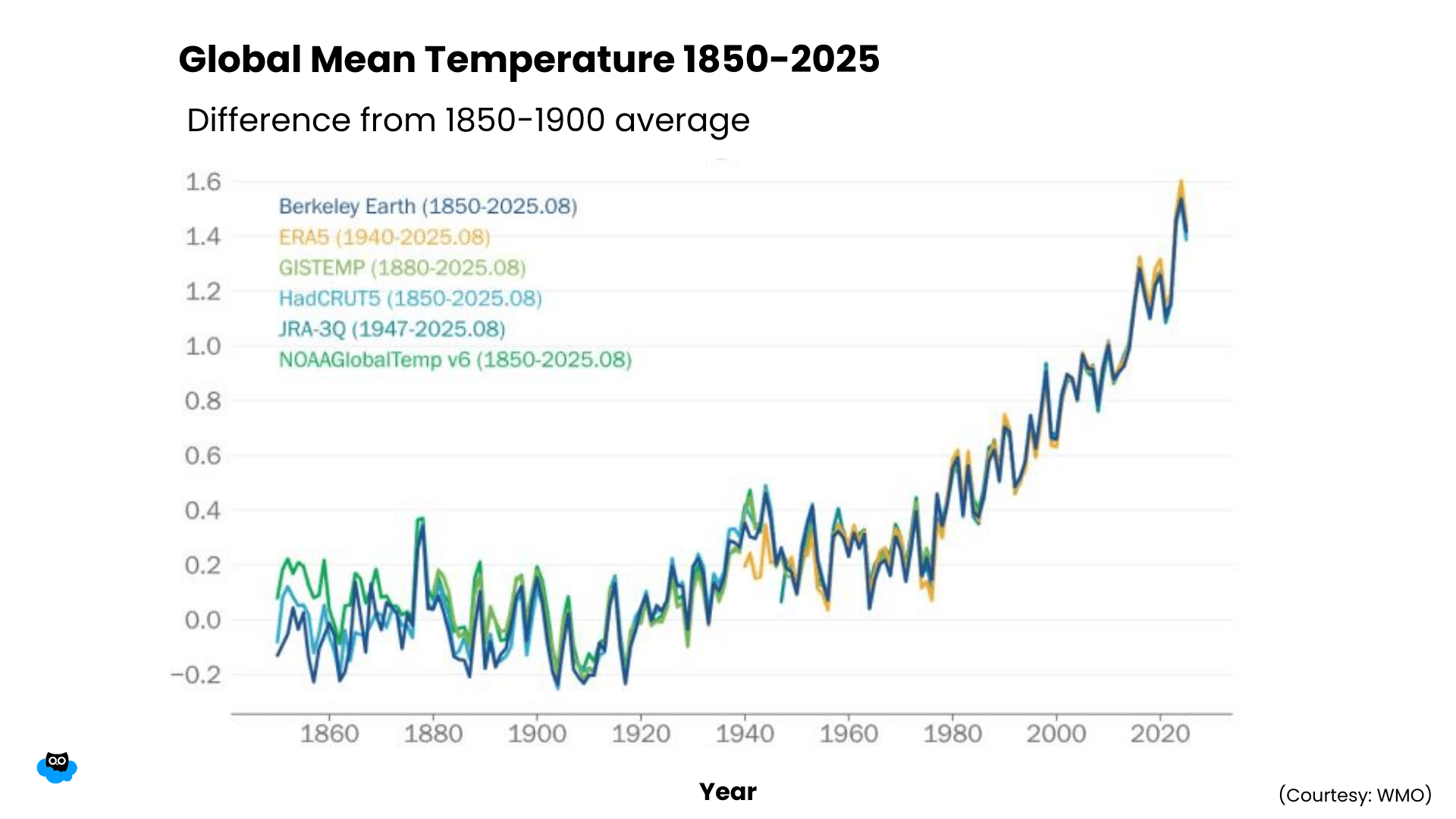
WMO data show that the last 11 years (2015–2025) are set to be the 11 warmest years in the 176-year observational record. The global mean near-surface temperature between January and August 2025 stood at 1.42°C above pre-industrial levels, despite a shift from warming El Niño conditions to neutral or La Niña conditions this year. This underlines that long-term warming is now largely driven by human-induced factors rather than natural climate variability.
Greenhouse gas concentrations continued to rise in 2025 after reaching record levels in 2024. Atmospheric carbon dioxide has increased by 53% since pre-industrial times, reaching 423.9 ppm, with further increases likely this year. At the same time, ocean heat content, which absorbs over 90% of excess heat trapped by greenhouse gases, also continued to climb, reinforcing long-term and potentially irreversible changes to the climate system.
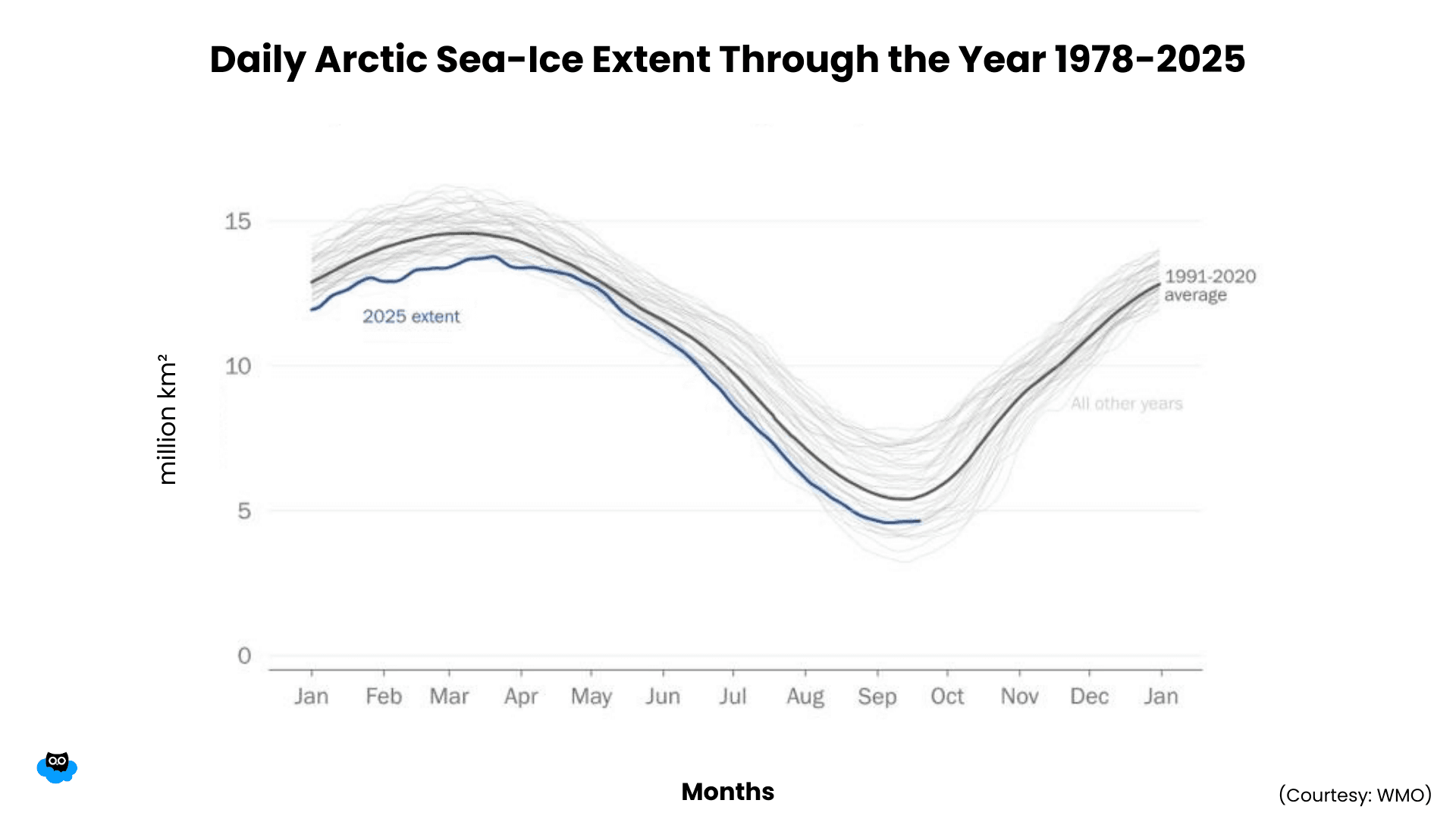
The impacts are already visible. Arctic sea ice recorded its lowest winter maximum on record, while Antarctic sea ice remained well below average throughout the year.
Global sea levels, which are rising at nearly double the rate seen in the 1990s, reached record highs in 2024, with only a temporary dip observed in early 2025 due to natural factors. Glaciers worldwide continued to lose mass for the third consecutive year, contributing further to sea-level rise.
Advertisement
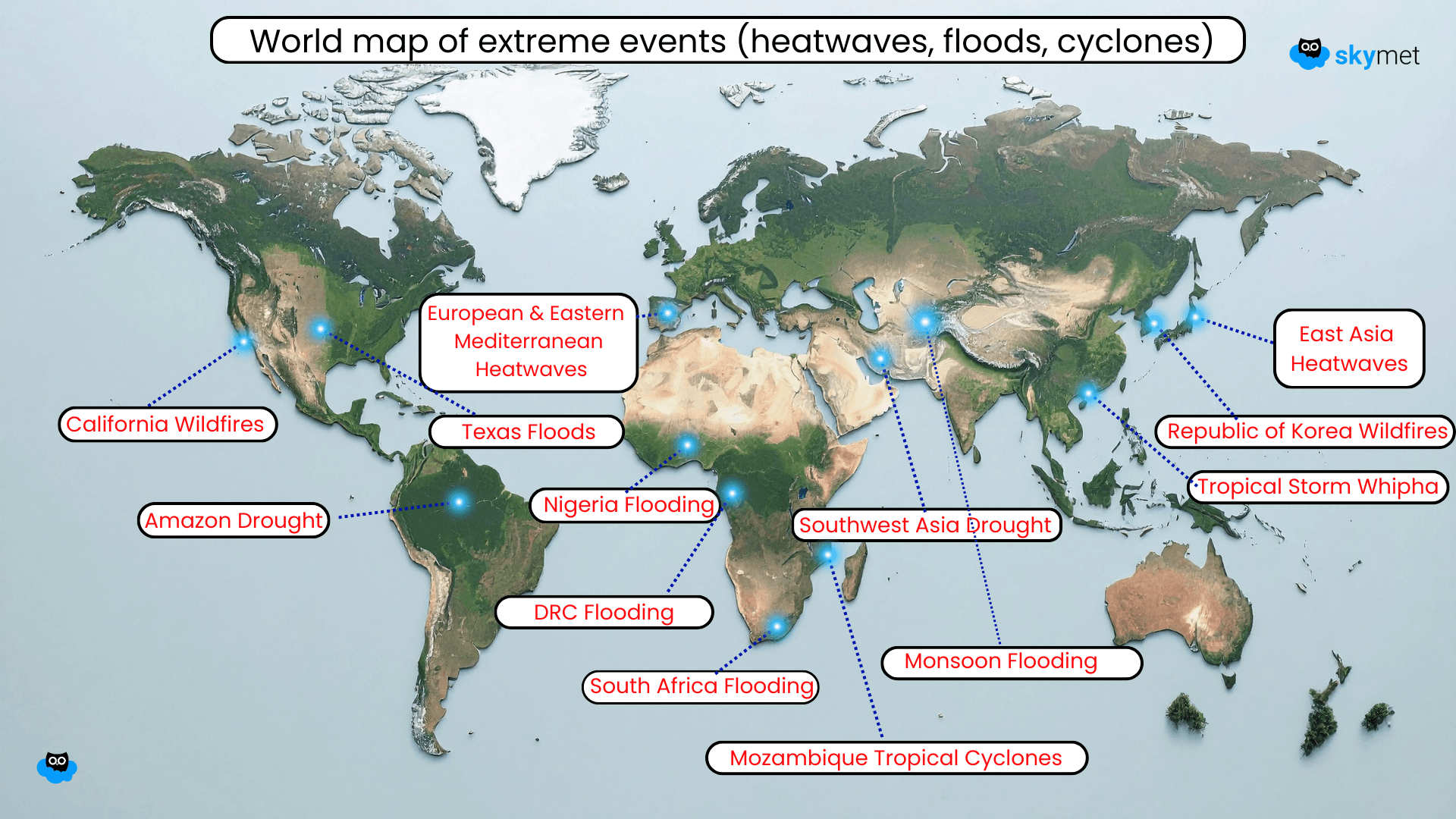
Extreme weather events during 2025—including floods in Africa and Asia, heatwaves across multiple continents, wildfires in Europe and North America, and deadly tropical cyclones—caused widespread loss of life, economic disruption and displacement.
WMO cautioned that limiting warming to 1.5°C in the near term is becoming increasingly unlikely without temporary overshoot. However, scientists stress that bringing temperatures back below 1.5°C by the end of the century remains possible, provided rapid and large-scale climate action is taken.
The report also highlights progress in early warning systems and climate services, which are proving critical in reducing disaster risks and supporting sectors such as agriculture, water, health and energy. Yet, with 40% of countries still lacking multi-hazard early warning systems, WMO emphasizes the urgent need to close remaining gaps as climate risks continue to intensify.
Overall, the findings reinforce a clear scientific message: global warming is accelerating, impacts are intensifying, and decisive action remains essential to safeguard lives, livelihoods and long-term climate stability.
The analysis is drawn from the World Meteorological Organization’s State of the Global Climate Update, released on 6 November 2025, which assesses global climate indicators up to August 2025.