Golden Supermoon of Novemeber 2025: Date, Visibility, and Viewing Tips for the Beaver Moon

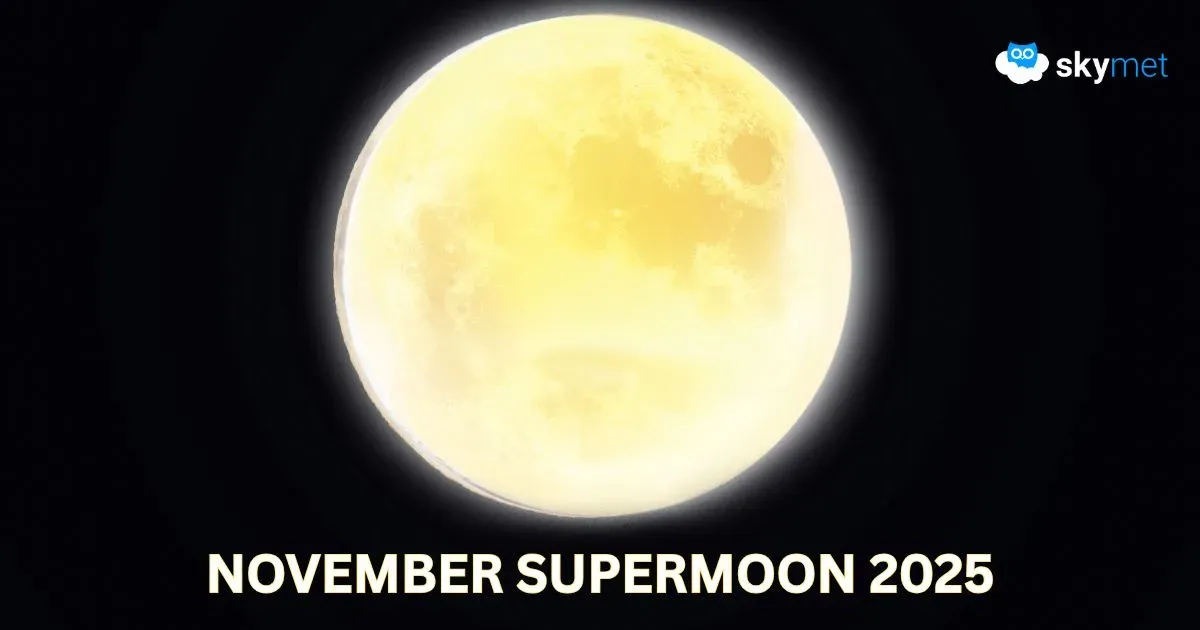
Image: AI-Skymet
The Moon is about to steal the spotlight this week. On November 5–6, 2025, skywatchers across the world will witness the year’s biggest and brightest full moon — the Beaver Supermoon. Coinciding with Bonfire Night in the UK, this celestial show promises to turn the night sky into a glowing stage of golden light, visible even through faint clouds and city skylines.
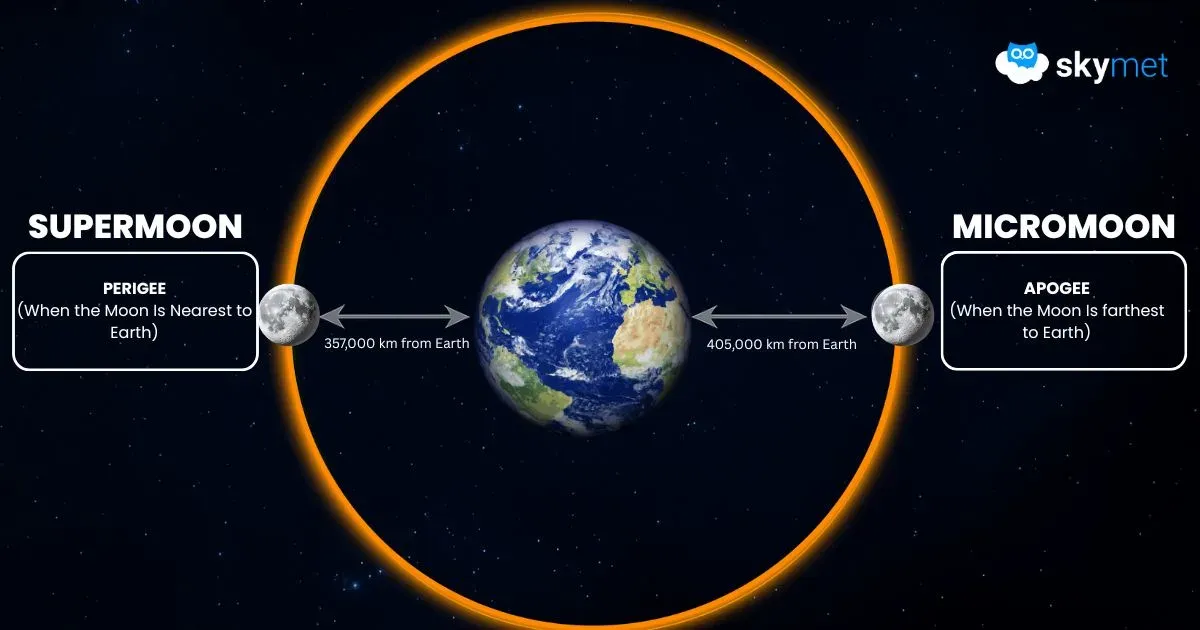
Image: AI-Skymet
Advertisement
What Makes This a Supermoon?
Advertisement
The term supermoon describes a full moon that coincides with the Moon’s perigee — the point where it comes closest to Earth in its elliptical orbit. During this event, the Moon will be just about 357,000 kilometres away, appearing up to 14% larger and 30% brighter than usual. NASA notes this will be the nearest lunar approach of 2025, making it a treat for stargazers and photographers alike.
Astronomically speaking, this full moon will reach peak illumination around 1:23 a.m. Eastern Time (6:53 a.m. GMT) on November 6, when the lunar disc will glow so brightly that it could cast faint shadows on the ground — a rare phenomenon only seen during the most intense supermoons.
The Significance of the “Beaver Moon”
November’s full moon is traditionally called the Beaver Moon, a name that traces back to Native American and early European folklore. It marked the season when beavers prepared for winter by building lodges and storing food before rivers froze over. The name also became symbolic of readiness and endurance before the onset of the cold months.
Interestingly, the Beaver Moon coincides with Bonfire Night in the UK, creating a rare visual combination of fireworks and moonlight bright enough to cast faint shadows on the ground—a spectacle expected only during intense supermoons.
When and Where to Watch
- The supermoon will reach its peak illumination around 1:23 a.m. Eastern Time (6:53 a.m. GMT) on November 6, remaining visibly full through the early hours of Thursday.
- For the best view, astronomers recommend stepping outside just after sunset or before sunrise, when the Moon is near the horizon. This position enhances the moon illusion, making it seem even larger against buildings, trees, or mountain silhouettes.
- Those watching from clear eastern skies are expected to have the best visibility, while western regions may see intermittent cloud cover. Across parts of the UK, a passing weather front may bring clouds to the west, but clearer skies are likely in eastern and central areas.
How to Observe the Supermoon
Advertisement
The beauty of a supermoon lies in its accessibility—it requires no telescopes or special equipment. Here are simple ways to enhance the experience:
- Use natural landmarks like trees or rooftops to create visual contrast and appreciate the scale.
- Avoid light pollution where possible; city rooftops or coastal areas offer clearer views.
- Binoculars can help reveal surface features such as craters and ridges near the lunar edge.
- Photography tip: The best time to capture the golden hue is during moonrise, when atmospheric scattering gives the Moon its characteristic warm glow.
The Science and Symbolism
Beyond its visual grandeur, a supermoon slightly strengthens the gravitational pull on Earth’s oceans, leading to marginally higher tides known as perigean tides. While not extreme, these subtle changes are closely monitored by oceanographers.
Culturally, the event continues to symbolize preparation, reflection, and connection with natural cycles—reminding us that even in modern times, celestial rhythms remain unchanged.
What’s Ahead?
The Beaver Supermoon will be followed by the third and final supermoon of 2025 on December 4, rounding off a year of exceptional lunar events. The Moon will not appear this bright and close again until November 2026.
As this November’s golden supermoon graces the night sky, it offers not only a rare astronomical alignment but also a moment to pause and reconnect with the quiet, recurring patterns of the natural world—constant, luminous, and timeless.
Skymet is India’s most accurate private weather forecasting and climate intelligence company, providing reliable weather data, monsoon updates, and agri-risk management solutions across the country.