Harvest Supermoon 2025 Tonight: When and Where to Watch in India, Visibility Details, and Significance

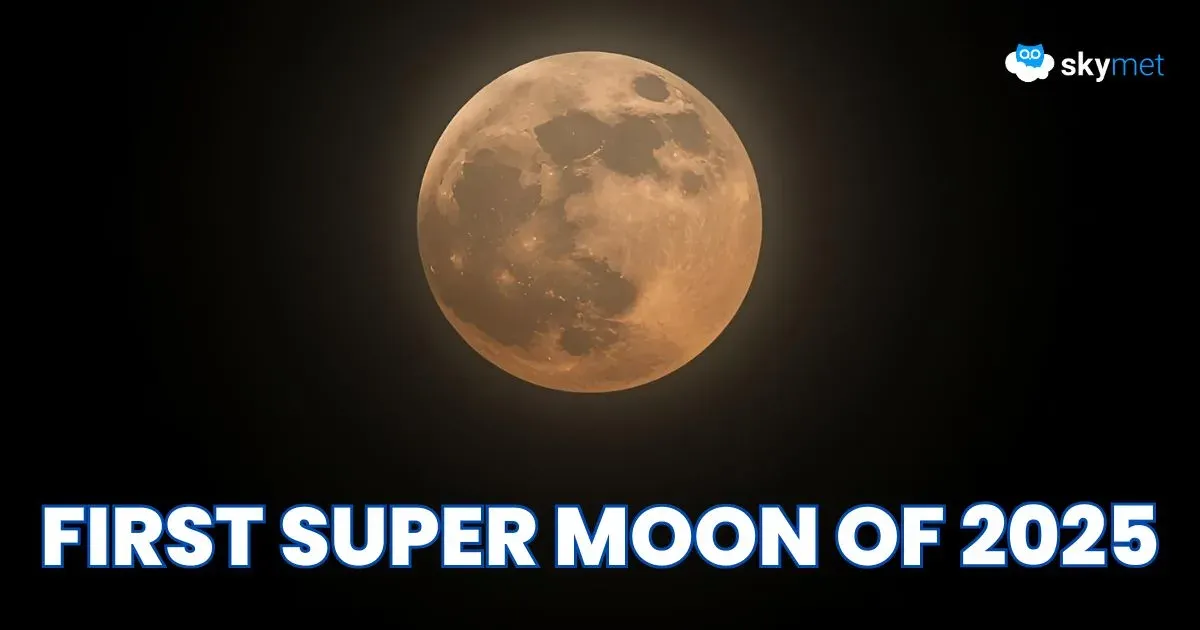
Image: AI-Skymet
A Celestial Treat Awaits Skywatchers in India
The first supermoon of 2025, known as the Harvest Moon, will illuminate the night sky on Monday, October 6, reaching its peak brightness at 9:17 a.m. IST on October 7. This will be the first of three consecutive supermoons visible this year, followed by the Beaver Moon on November 5 and the Cold Moon on December 5, according to NASA and international observatories.
A supermoon occurs when the full moon coincides with its closest approach to Earth, making it appear up to 14% larger and 30% brighter than usual. During this celestial event, the moon will come as close as 361,459 kilometers to Earth, making it a dazzling spectacle for stargazers across India — best viewed away from city lights under clear skies.
Advertisement
Why It’s Called the Harvest Moon
Advertisement
Traditionally, the Harvest Moon is the full moon that appears closest to the autumn equinox, which occurred on September 22 this year. The name originates from the time when farmers used the bright moonlight to harvest crops like rice, corn, and grains late into the evening.
The phenomenon also reduces the usual 50-minute moonrise delay between consecutive nights to around 20–25 minutes, giving the impression of longer twilight hours — a useful feature for early agrarian societies.
Supermoon Viewing Timings and How to Watch in India
The Harvest Moon will rise over the Indian horizon around 6:10 p.m. on October 6 and remain visible throughout the night until dawn on October 7.
For the best experience:
- Step away from city glare to rural or coastal areas.
- View near the eastern horizon where the moon appears largest due to the “moon illusion.”
- Use a tripod-mounted camera or binoculars to capture Saturn and Jupiter, which will also be visible near the moon in the southeastern sky.
This event coincides with the Draconid meteor shower, peaking around the same time. However, NASA notes that the supermoon’s brightness might reduce visibility of faint meteors.
Supermoon Season and Upcoming Astronomical Events
October’s supermoon kicks off a three-month sequence visible across India and much of Asia:
- October 6 – Harvest Moon (Supermoon 1)
- November 5 – Beaver Moon (Supermoon 2) – expected to be the largest and brightest of 2025.
- December 5 – Cold Moon (Supermoon 3) – marking the start of winter and the longest nights of the year.
Advertisement
In addition to the supermoons, the Indian night sky will dazzle with three major meteor showers — the Orionids (Oct 21–22), Leonids (Nov 17–18), and Geminids (Dec 13–14) — each visible to the naked eye under dark, clear skies.
Cultural and Astronomical Significance
The Harvest Moon holds deep cultural resonance across India, aligning closely with Sharad Purnima, which celebrates the end of the monsoon and the beginning of the harvest season. In many regions, people believe moonlight on this night is medicinal and spiritually purifying, with households preparing kheer (sweetened milk) under the moonlit sky.
As NASA’s Derrick Pitts explains, while supermoons are not rare, they offer “a collective moment of wonder — a chance for people worldwide to look up together.”
Full Moon Calendar for the Rest of 2025
- November 5: Beaver Moon (Supermoon #2)
- December 5: Cold Moon (Supermoon #3)
- Next total lunar eclipse: March 2026 (visible in Asia, Australia, and North America)
With the Harvest Moon heralding this celestial series, 2025 promises to be a remarkable year for skywatchers in India, uniting science, tradition, and beauty in one luminous night.