Trail Of Western Disturbances Across North India: Mainly Impact Mountains

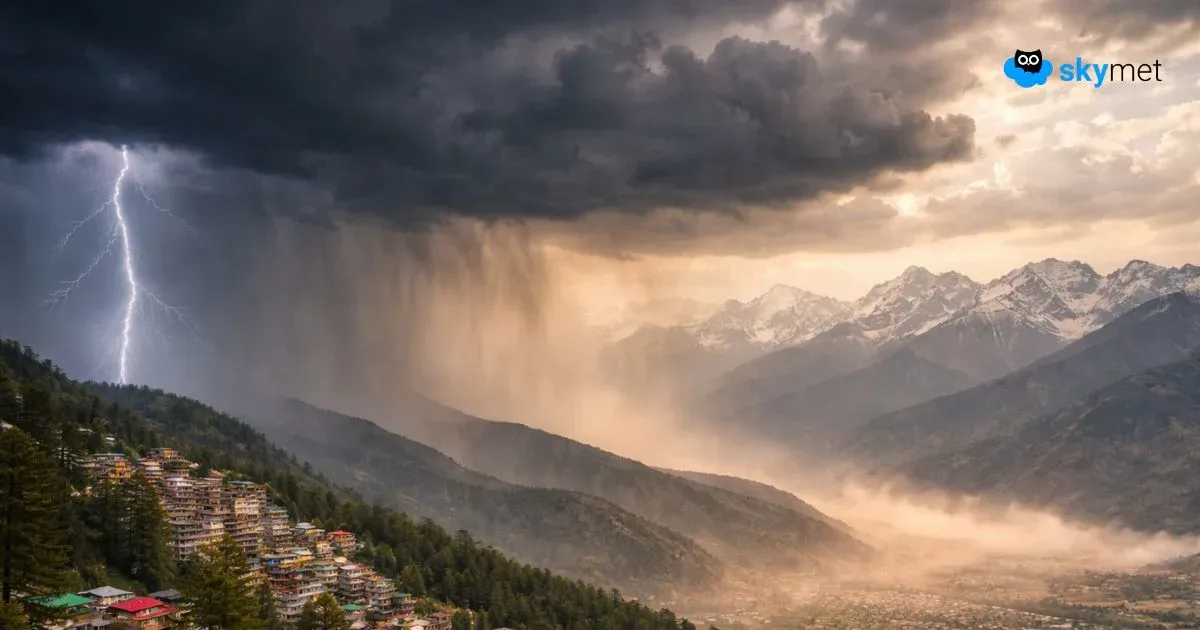
Representational Image: AI-Skymet
Key Takeaways:
- Western disturbances will primarily affect the Himalayas between March 6 and 12.
- Weather impact will remain confined to mid and higher reaches of the mountains.
- Rising temperatures may help trigger pre-monsoon thunderstorms over North Indian plains.
- Another disturbance around March 14–15 could initiate early pre-monsoon activity.
Advertisement
With the arrival of pre-monsoon over the northern parts, the western disturbances start tracking more to the north and impact mostly the mountains. The plains get their share from the secondary induced circulations, as and when accompanying the main systems. The pre-monsoon activity over the plains of North India, in terms of thunderstorm, dust storm, or rainfall, is an offshoot of such situations. Rising temperatures also act as a trigger to increase the spread and intensity.
Advertisement
A western disturbance is marked over the Jammu & Kashmir region, as an upper air system. This system will stay for two days and affect weather over the mountains on 06th and 07th March. Another western disturbance will follow quickly on 09th March. This system will stay longer, till 12th March, but like the previous one, will affect the mid and higher reaches of the hilly states. Yes, this system will be slightly stronger, and therefore, the intensity and spread of weather will be more than the previous one.
Though the model reliability goes low after a lead time of 4–5 days, there are precursors to another system possibly arriving around the next weekend between 14th–15th March 2026. This disturbance may be accompanied by an induced cyclonic circulation over the plains. The rising temperature may also accelerate and increase the spread of weather activity. This may commence the pre-monsoon activity over the plains, albeit mild to moderate to start with. The forecast will need an update sometime around the start of next week.