

Flash Floods and Landslides in Himalayas: Reasons Why Glacier Collapses and Cloudbursts Are Devastating Parts of India

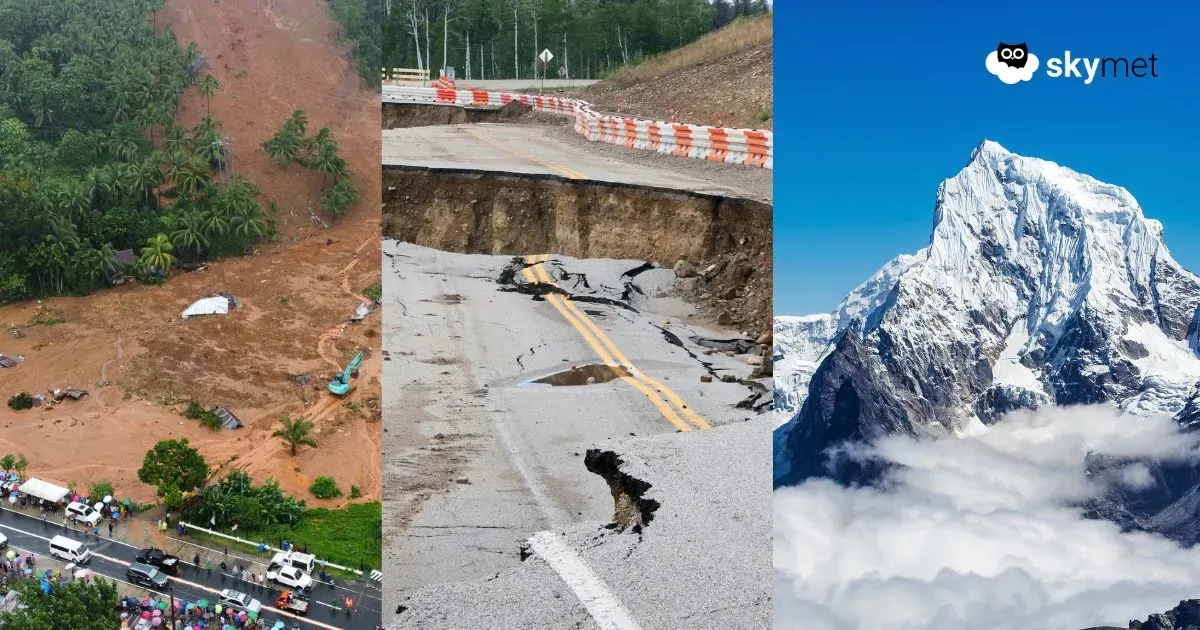
Himalayan States Reel Under Flash Floods & Landslides: Climate Change Fuels Rising Extreme Weather Threat | Image: Skymet/Canva
Flash floods and landslides triggered by intense monsoon rains have wreaked havoc across Jammu and Kashmir, Himachal Pradesh, and Uttarakhand this August, underscoring the growing threat of extreme weather in India’s Himalayan states.
Advertisement
In Jammu and Kashmir, torrential rain caused flash flooding and landslides, adding to a series of back-to-back disasters across the Western Himalayas. Earlier this month, flash floods struck Uttarakhand’s Dharali region, likely caused by a collapsing glacier. Heavy rains also battered Kullu, Shimla, Lahaul, and Spiti, continuing a trend of escalating disasters across the north.
Advertisement
Research shows a sharp increase in extreme rainfall events like cloudbursts and flash floods in the region, especially after 2010. Rising global temperatures are believed to be fueling the trend, as warmer air holds more moisture, increasing the risk of sudden, intense rainfall. The unique geography of the Western Himalayas — with steep slopes and high altitudes — makes these regions especially prone to disasters.
A 2025 study reviewing cloudburst events from 1970 to 2024 found Uttarakhand most affected, with frequent incidents also recorded in Himachal Pradesh and Jammu and Kashmir. Flash floods during the monsoon season and winter weather systems have both contributed to rising damage.
One example is the 2019 cloudburst in Uttarkashi’s Arakot region, which killed 19 people and destroyed villages across 70 square kilometres. Similar disasters are becoming more frequent as glaciers continue to retreat due to warming, making them unstable and prone to collapse. Glacier-fed channels such as Kheer Ganga have been linked to recent flash floods in Uttarakhand.
Mapping of the Alaknanda and Bhagirathi river basins identified over 200 hanging glaciers, many at risk due to rapid melting. These unstable ice masses pose a serious threat during heavy rain or seismic activity.
Meanwhile, unplanned construction and settlements along rivers are compounding the danger. Dense housing in flood-prone zones and lack of safe building areas have increased casualties and property loss when disasters hit.
Studies have also highlighted the role of environmental factors like cloud thickness, moisture levels, and aerosol density in increasing flood risk across districts like Nainital.
Experts call for urgent measures such as hazard mapping, relocation from high-risk zones, flood warning systems, and better planning to protect lives and infrastructure before the monsoon season.
Advertisement
While extreme rainfall is rising in the Western Himalayas, a contrasting trend is seen in neighbouring Nepal, where overall extreme daily rainfall has decreased, though western regions are getting wetter.
India’s Himalayan belt is now at a critical juncture, with climate change and poor planning turning seasonal rains into deadly disasters.


