El Nino May Return During Monsoon 2026


Key Takeaways
- Early signs indicate weakening La Niña and possible transition to ENSO-neutral by spring 2026.
- Skymet warns that an evolving El Niño could be more harmful than a strong, established one.
- Second half of Monsoon 2026 may face below-normal rainfall if El Niño develops.
- Oceanic and atmospheric indices are showing signs of losing La Niña support.
Advertisement
Rhetoric of El Niño is back with the monsoon forecast of 2026. Climate analysts are mulling over and contemplating speculations of likely El Niño conditions during the upcoming Indian Summer Monsoon. Amongst many, Skymet was the first to break the news and express fears of evolving El Niño. The official statement from Skymet says, “Evolving El Niño” is more worrisome than a full-blown El Niño. Though these are still early days, it needs rumination to allay fears, if any, of a spoiled Monsoon 2026.
Advertisement
The National Weather Agency has also deliberated on the emergence of El Niño during the monsoon season. In the weather outlook, the agency has gone for continuation of La Niña for the next two months, before making a transition to ENSO-neutral by March 2026. Skymet has emphatically expressed chances of below-normal rainfall attributable to the return of El Niño in the second half of the season. Severe Weather Europe, a European weather and climate analysis platform, said its latest projections suggest El Niño to intensify in the second half of the year and persist through the 2026-27 season.
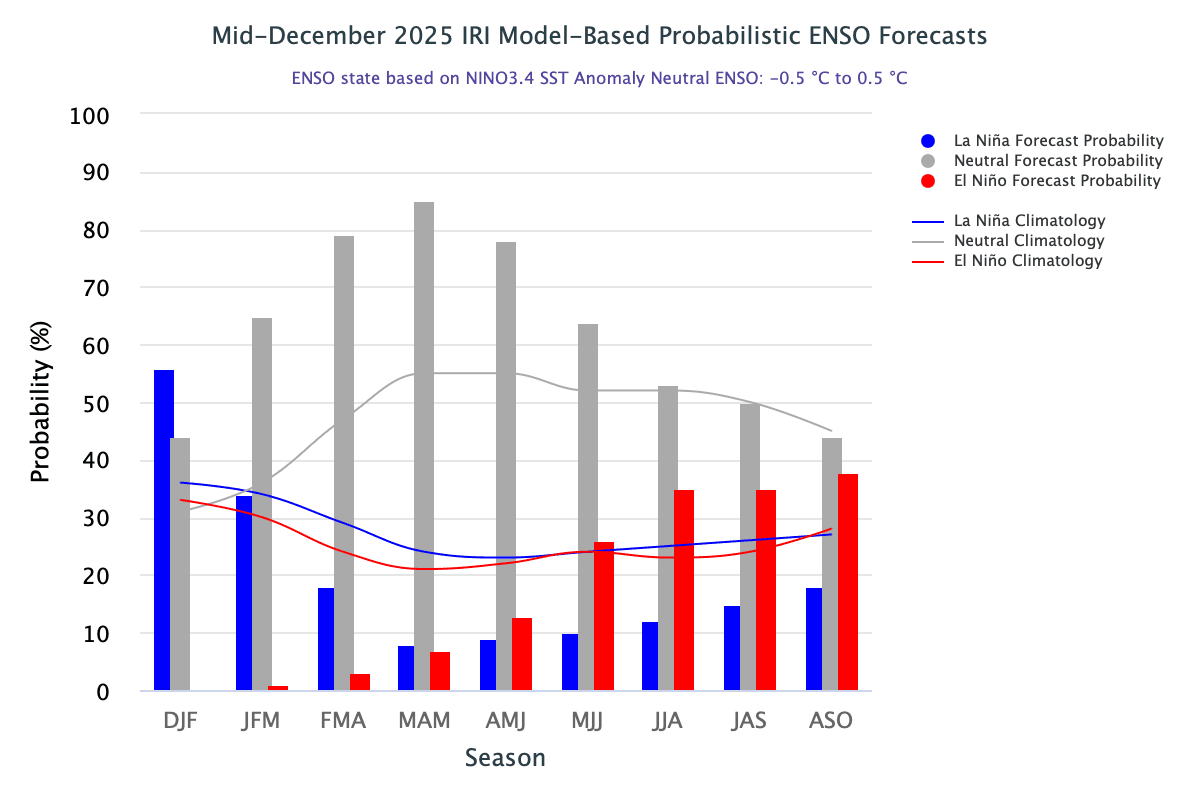
ENSO: World Met Organization had earlier commented on prospects of El Niño as negligible in the outlook period till April 2026. However, the world agency was cautious about the later months and is yet to update its forecast. La Niña conditions in the tropical Pacific appear to be weakening. The cooling phenomenon of sea surface temperature in the equatorial Pacific may not build adequately.
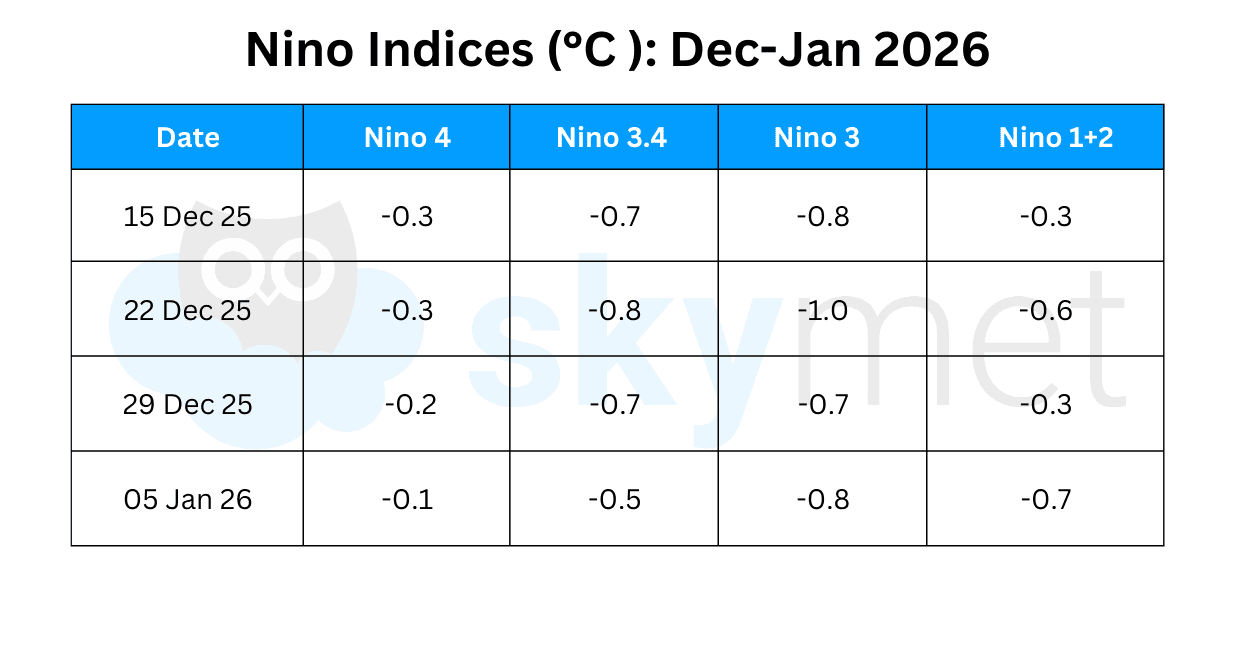
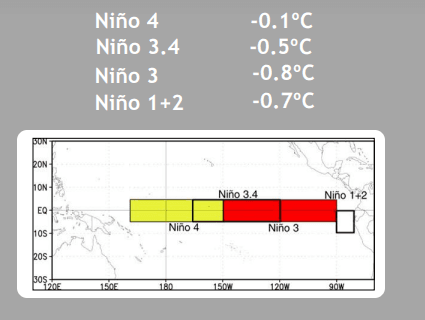
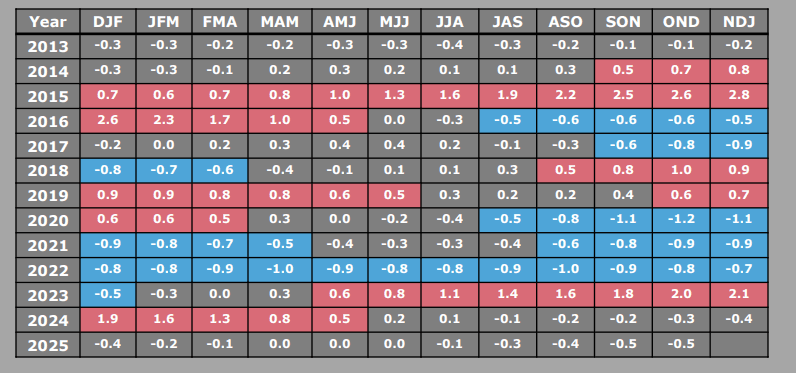
Niño 3.4 is the marker index for ENSO status. There has been a gradual fall of the index value, which has now dropped to the threshold mark of -0.5°C. Even the Oceanic Niño Index (ONI) for the quarter Oct-Nov-Dec retains its previous mark of -0.5°C, the same as the earlier quarter of Sep-Oct-Nov.
Advertisement
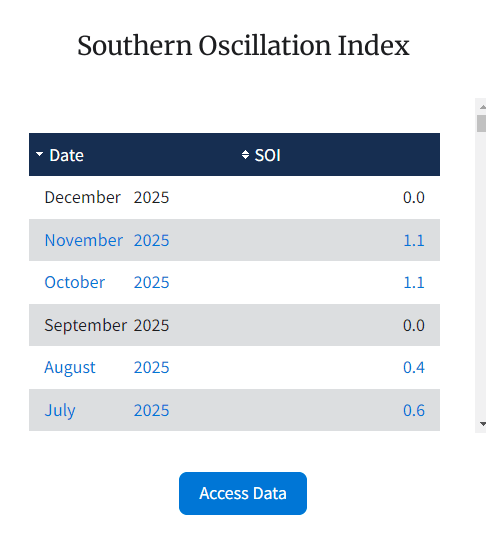
The continuation of sluggish cooling of the equatorial Pacific may result in a similar value for the next quarter as well. Also, the Southern Oscillation Index (SOI), representing the atmospheric arm of ENSO, has plunged to zero in Dec 2025. Earlier, it was firmly holding the hand of La Niña conditions with an average value of 1.1 in the months of October and November 2025.
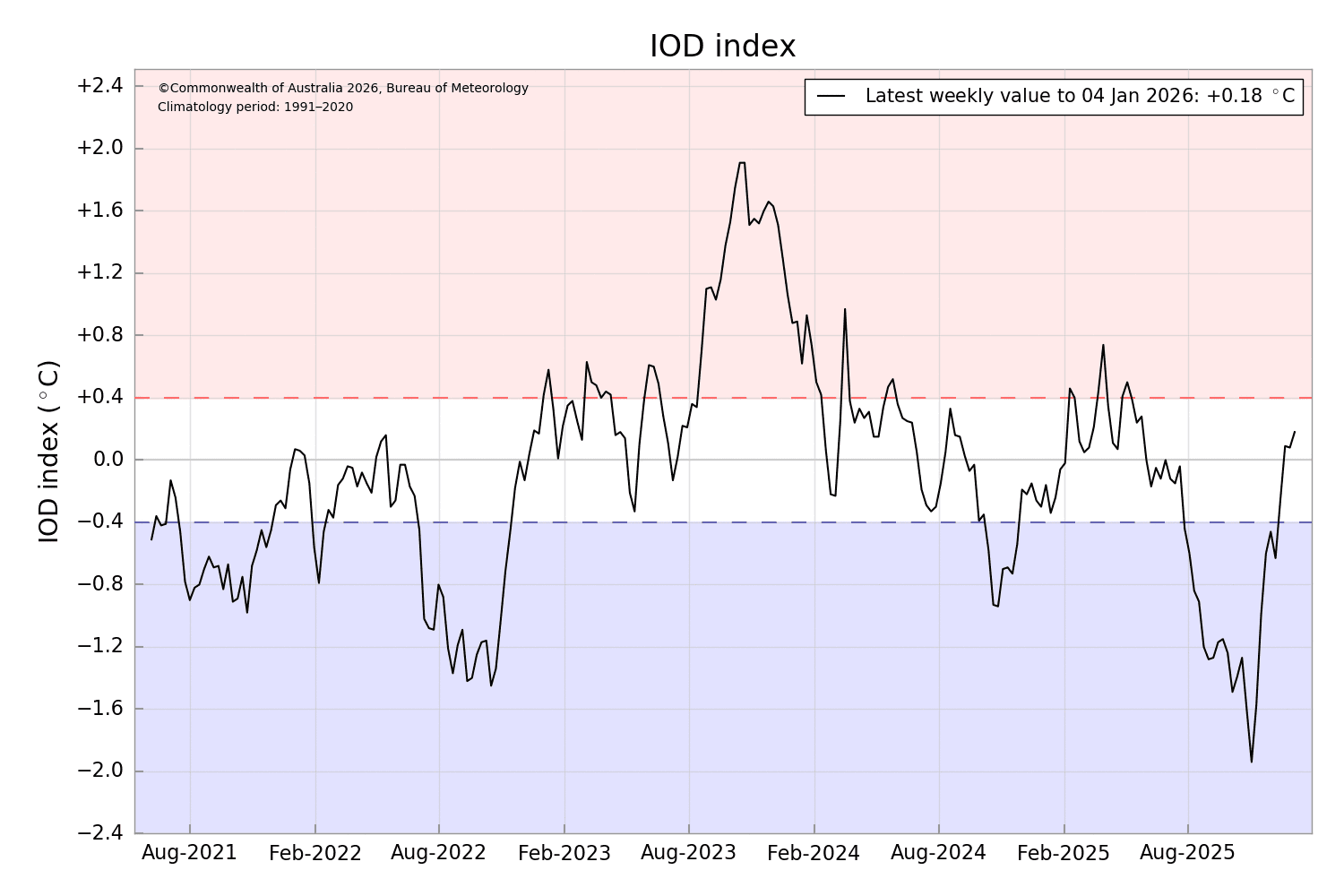
IOD: The negative phase of the Indian Ocean Dipole, earlier seen till Nov 2025, has weakened and turned neutral during Dec 2025. The latest value of the index for the week ending 04 Jan 2026 was 0.18°C. The dipole is likely to stay neutral in Jan 2026 and status quo may be maintained during the spring season of 2026.
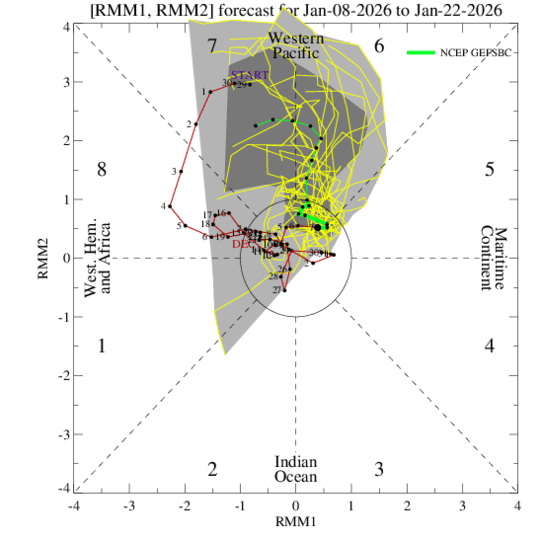
MJO: The Madden-Julian Oscillation has remained weak for the past few weeks, but there are signs of strengthening. The weakening of La Niña conditions supports amplification of MJO over the Western Pacific. The predicted strengthening during the next two weeks favours an active phase for tropical storms. Already, there is a tropical cyclone Jenna south of the equator over the East Indian Ocean. Another invest area is marked over the Coral Sea. Jenna is likely to weaken as it travels westward over the open waters of the ocean.
Sustenance of La Niña conditions looks to be at stake. La Niña may collapse earlier than expected. ENSO-neutral is likely in the early spring of the Northern Hemisphere. Historic records vindicate that El Niño, even an evolving one, is not considered safe for the Indian Monsoon. It is well known to derail seasonal prospects, with rainfall ranging between below normal and deficit.