Back-To-Back Western Disturbances: Extended Pre-Monsoon Activity Likely

Key Takeaways:
- First pre-monsoon showers were recorded across Jammu, Kathua, Udhampur, Pathankot and Amritsar after a long dry spell.
- Light rain and thundershowers may spread across parts of Punjab, Haryana and Chandigarh today.
- A Western Disturbance arriving on March 14 may trigger scattered rain across Delhi, Punjab, Haryana and Southwest Uttar Pradesh.
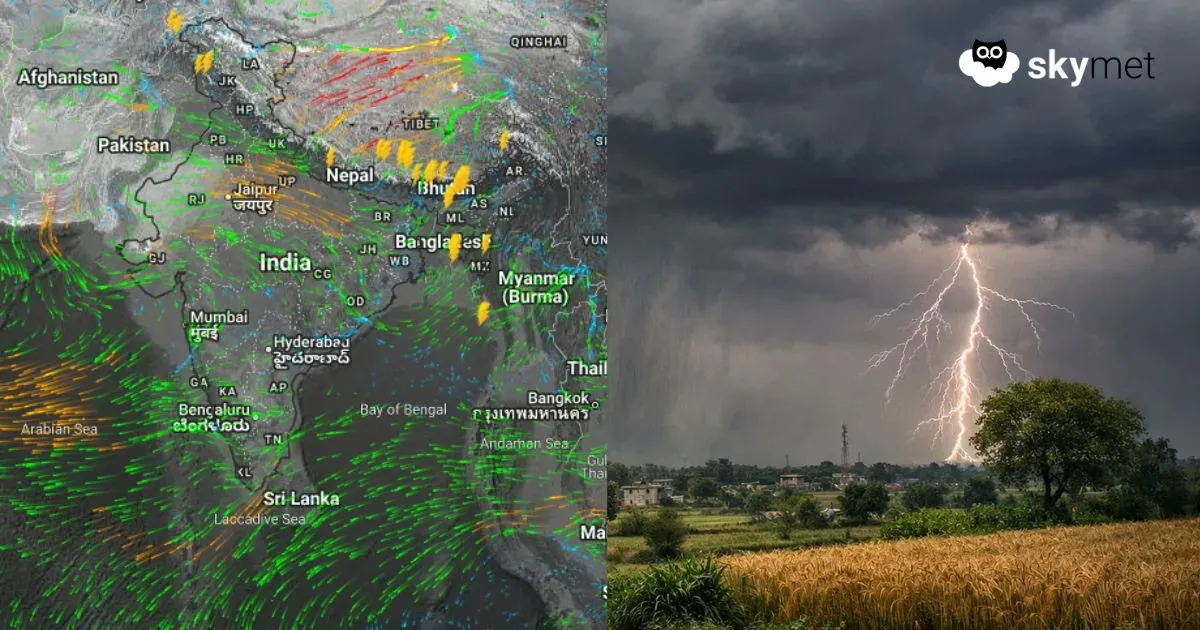
- A stronger Western Disturbance around March 17 may bring thunderstorms, gusty winds and lightning between March 18 and 20.
Advertisement
The westerly systems have given a complete miss so far and, consequently, the plains of North India have remained barren. After a very long gap, under the influence of a westerly system, the northern mountains and foothills of Jammu and Punjab received scattered light rainfall last night. Jammu, Kathua, Udhampur, Pathankot and Amritsar received the first pre-monsoon showers. The activity will continue and cover more northern parts of Punjab, Haryana and Chandigarh today. The weather system will vacate the plains by late tonight or early tomorrow morning.
Advertisement
There is another Western Disturbance likely to arrive on the night of March 14. A small-scale circulation will also be marked over North Rajasthan and the adjoining Punjab region. An east-west oriented trough will run from the circulation to Southwest Uttar Pradesh, remaining in proximity to Delhi. Scattered rain and thundershowers are likely over parts of Punjab, Haryana, Delhi, Southwest Uttar Pradesh and North Madhya Pradesh. The weather activity is going to be limited and of mild intensity. Still, it will be good enough to arrest the rising trend of temperatures over North India.
Another Western Disturbance is likely to approach on March 17. This will be a relatively stronger system and will be supported by an induced circulation over the plains. The spread and intensity will be bigger this time. Between March 18 and March 20, the states likely to fall under the influence of this system will include Rajasthan, Punjab, Haryana, Delhi and Uttar Pradesh. The weather activity will also travel to cover parts of Madhya Pradesh and reach parts of Bihar, Jharkhand and Chhattisgarh with a lag of about 24 hours. During this period, typical pre-monsoon hazards such as thunderstorms, gusty winds and lightning are likely. Since model reliability degrades after a lead time of about three days during the pre-monsoon season, the forecast will need review and revision if necessary. Nevertheless, this will mark the beginning of visible pre-monsoon activity across large parts of the country.