

Another Storm Likely Over Arabian Sea: No Threat To Indian Coastline

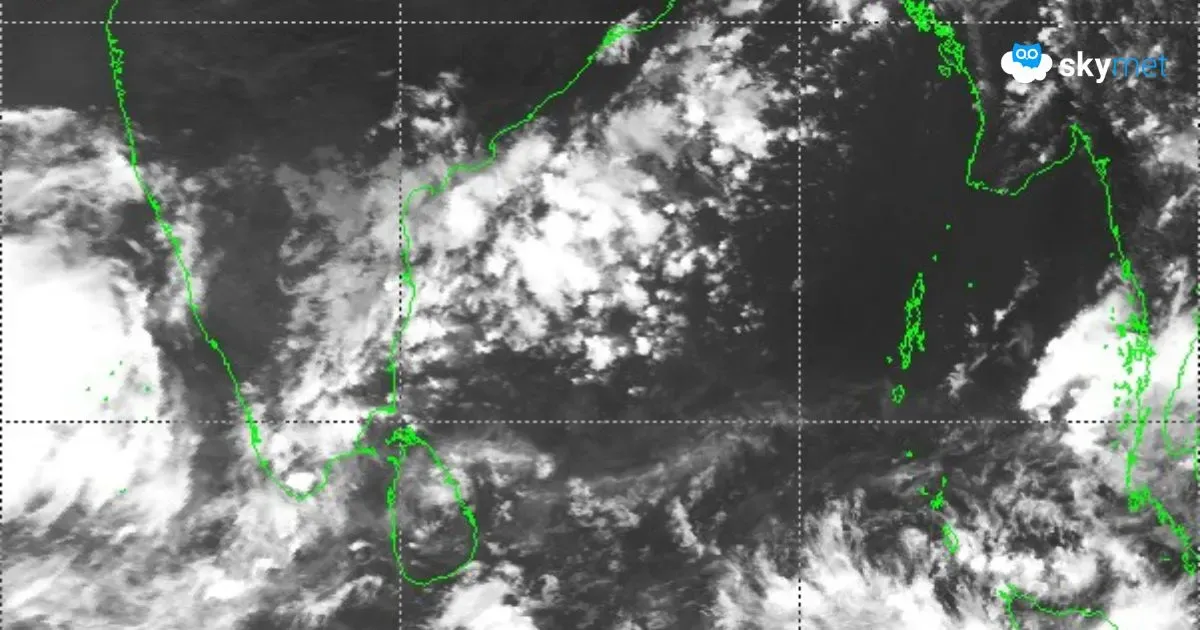
Live Sat Image, Courtesy: Himawari
As reported earlier, a low-pressure area is likely to form over the Southeast Arabian Sea by tomorrow. It is expected to become well-marked the next day and may intensify further into a depression on 20th October 2025. As a depression or deep depression, the system will be positioned over the south-central Arabian Sea and is likely to track further west-northwest. It will be premature to comment on the exact track and intensity of the system due to model limitations. Yet, under favourable conditions, it stands a chance to strengthen further into a tropical storm over the west-central Arabian Sea.
Advertisement
Currently, the environmental conditions favour the deepening of such systems over that part of the sea. As it moves further westward, the sea surface temperatures tend to drop near the Somalia–Yemen coast. Historically, many systems have weakened before making landfall close to the Horn of Africa. As it appears, the depression is likely to intensify into a storm around 22nd October 2025. If so, the storm will be named ‘Montha’, pronounced as ‘Mon-Tha’.
Advertisement
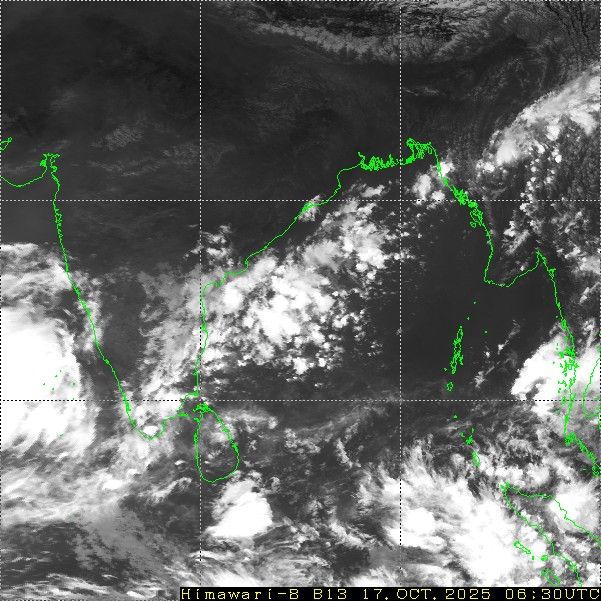
The track of the storm will be similar to the tropical cyclone ‘Tej’, which formed in the Arabian Sea in October 2023. There was no storm over the Arabian Sea during the post-monsoon season last year. Tej had rapidly intensified into a Category-III storm — an Extremely Severe Cyclonic Storm — between 20th and 21st October 2023. The storm headed towards the Somalia–Yemen coast but started weakening before striking the coastline. It made landfall at Al Mahrah Governorate of Yemen between 23rd and 24th October 2023.
There will be more clarity on the track, timelines, and intensity of the cyclone after it emerges as a depression in the south-central parts of the Arabian Sea. The storm is expected to keep a safe distance from the Indian coastline. However, the presence of the system will cause scattered rain and thundershowers over Kerala, Coastal Karnataka, and Konkan & Goa between 17th and 22nd October 2025. Meanwhile, another system is likely to form in the Bay of Bengal around 22nd October. As that system develops, most parts of South Peninsular India may continue to experience weather activity, possibly with greater intensity.


