

Cyclones: The Science Behind Nature’s Fiercest Storms

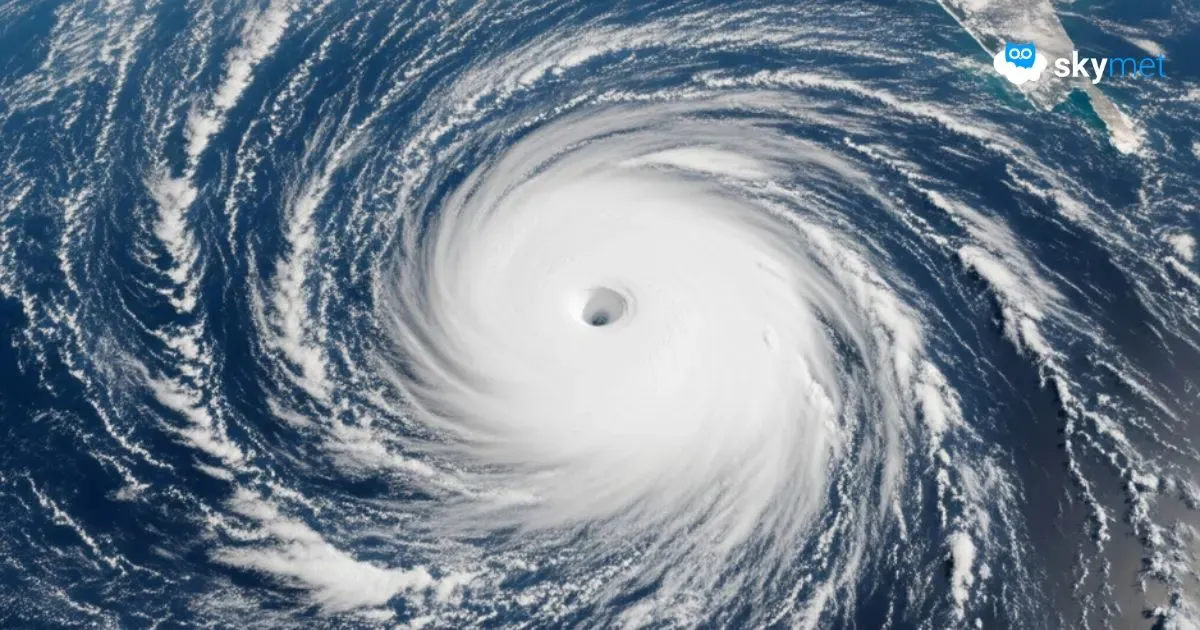
Image: AI-Skymet
Cyclones remain one of the most powerful weather systems affecting India every year. While they bring much-needed rainfall to some regions, their destructive potential along the coastline cannot be overlooked. When a low-pressure area over the sea begins to intensify, it’s not just a weather forecast; it’s a call to action for millions. Cyclones, or what we in the scientific community call tropical cyclones, are a force of nature we must respect and understand. This article is a guide to demystify these storms, helping you understand their science, their behaviour, and how we, as a nation, prepare for them. My goal is to equip you with the knowledge to make informed decisions when the threat of a cyclone is on the horizon.
What is a Cyclone?
Advertisement
In meteorology, a cyclone is a large air mass that rotates around a strong centre of low atmospheric pressure, counter clockwise in the Northern Hemisphere and clockwise in the Southern Hemisphere as viewed from above. Cyclones are characterized by inward spiralling winds that rotate about a zone of low pressure. In simple terms, it is an intense circular storm that develops over warm tropical oceans and carries violent winds, heavy rain, and storm surges. It’s a low-pressure area at its core, with winds spiralling inward at high speeds. For a storm to be officially classified as a cyclone, its sustained wind speeds must reach at least 62 km/h. Depending on the region, these storms are known by different names. In the Indian Ocean and South Pacific they are called Cyclones, in the Atlantic and Northeast Pacific they are called Hurricanes, and in the Northwest Pacific they are called Typhoons.
Advertisement
Cyclonic System vs. Cyclonic Storm – What’s the Difference?
Cyclonic System: A cyclonic system is a broad term for any weather system that has a cyclonic circulation (air rotating counter-clockwise in the Northern Hemisphere and clockwise in the Southern Hemisphere). This term includes all stages of development, from a weak low-pressure area to a powerful super cyclonic storm.
Cyclonic Storm: A specific category of cyclone with wind speeds between 62 and 88 km/h. It is one stage in the hierarchy of cyclonic systems, stronger than a deep depression but weaker than a severe cyclonic storm. A tropical cyclone receives an official name only when it reaches this stage.
Every cyclonic storm is a cyclonic system, but not every cyclonic system qualifies as a cyclonic storm.
Cyclone, Typhoon, or Hurricane – What’s the Difference?
Although the terms cyclone, typhoon, and hurricane are often used separately, they all refer to
the same weather phenomenon: a powerful tropical storm system with rotating winds and heavy rains. The difference lies only in the region of the world where the storm occurs.
- Hurricanes – Found in the North Atlantic Ocean and the Northeast Pacific Ocean.
- Typhoons – Found in the Northwest Pacific Ocean, affecting East and Southeast Asia.
- Cyclones – Found in the Indian Ocean (Bay of Bengal and Arabian Sea), Southwest Pacific, and Southwest Indian Ocean.
Cyclones are a reminder that our planet’s atmosphere is dynamic, powerful, and deeply interconnected. By blending scientific insight with preparedness and early warning systems, communities can reduce vulnerability and build resilience against these intense storms. Understanding their behaviour isn’t just fascinating—it’s essential for adapting to a changing climate and protecting lives.
Advertisement
Do Not Miss:


