ISRO Makes History: ‘Bahubali’ LVM3 Rocket Powers India’s Heaviest Satellite CMS-03 into Orbit

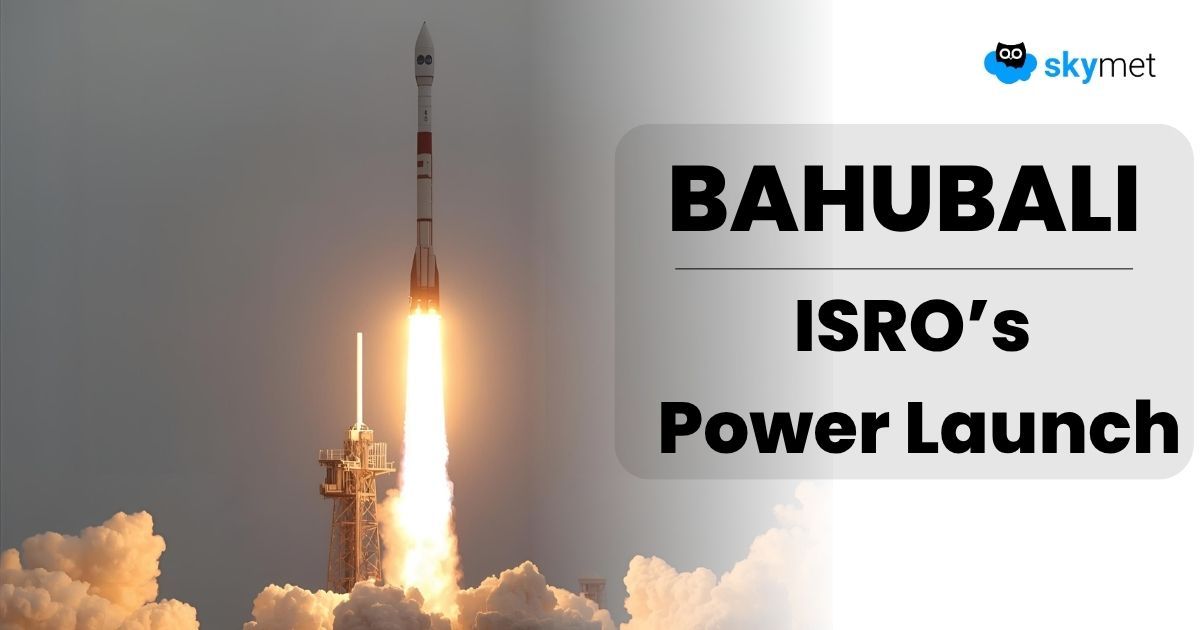
Image: AI-Skymet
On Sunday, ISRO launched India's heaviest and most advanced communication satellite yet—CMS-03 (GSAT-7R), clocking in at about 4,400 kg—using its indigenous heavy-lift ‘Bahubali’ rocket, the LVM3-M5, from the Sriharikota spaceport. The feat marks a new chapter in India’s celestial ambitions, underlining advances not only in payload capacity but also in engineering, scientific mastery, and strategic autonomy.
What Happened: A Record-Breaking Launch
CMS-03, crafted to serve the Indian Navy and enhance secure communications across the Indian Ocean Region, was injected into geosynchronous transfer orbit after a flawless liftoff at 5:26 pm IST. The satellite, designed for a 15-year lifespan, features robust encryption, high-capacity transponders, and broad multi-band coverage for data and voice—a transformative step for India’s maritime security and situational awareness.
Advertisement
Advertisement
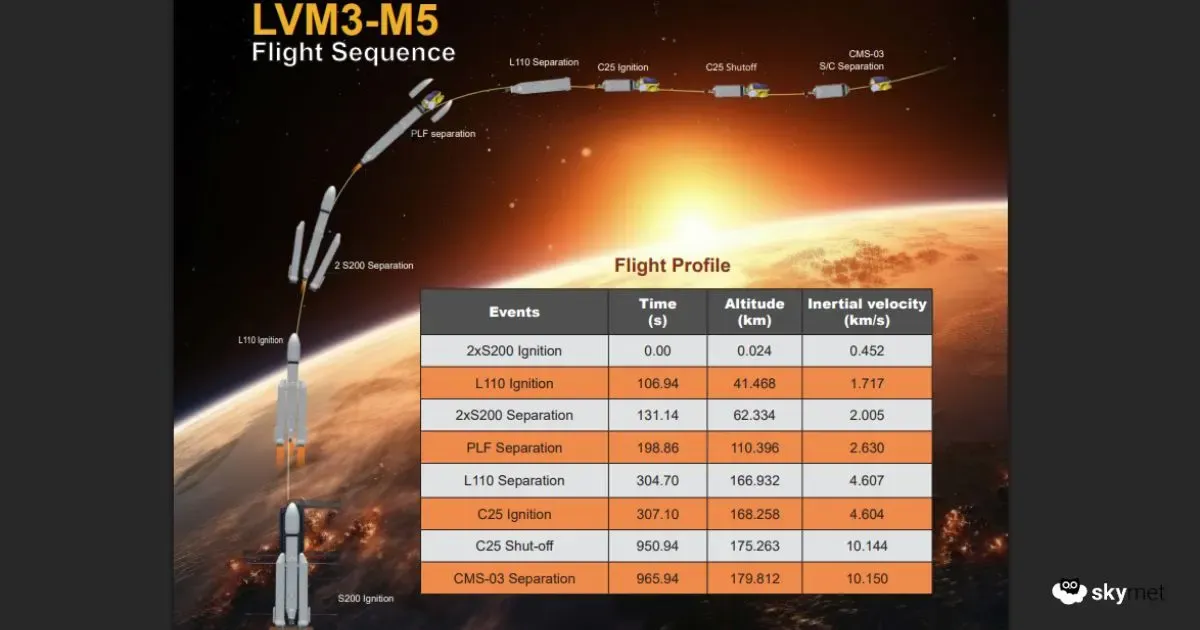
Courtesy: www.isro.gov.in
This mission didn’t just set a record for the heaviest satellite hoisted by an Indian launcher—it broke the LVM3’s own GTO capacity limit by about 10%, accomplished not by reconfiguring hardware but through smart mission design and efficiency improvements.
LVM3-M5: The Science and Engineering Backbone
The LVM3, endearingly nicknamed ‘Bahubali’ by the public for its immense might, represents the zenith of Indian rocket science. Towering at 43.5 meters with a lift-off weight of 640 tonnes, this three-stage vehicle comprises:
- Two S200 solid strap-on boosters for a powerful atmospheric punch.
- An L110 liquid core stage driven by twin Vikas engines, offering sustained thrust.
- A high-efficiency C25 cryogenic upper stage, powered by supercooled hydrogen and oxygen, which achieves orbital precision.
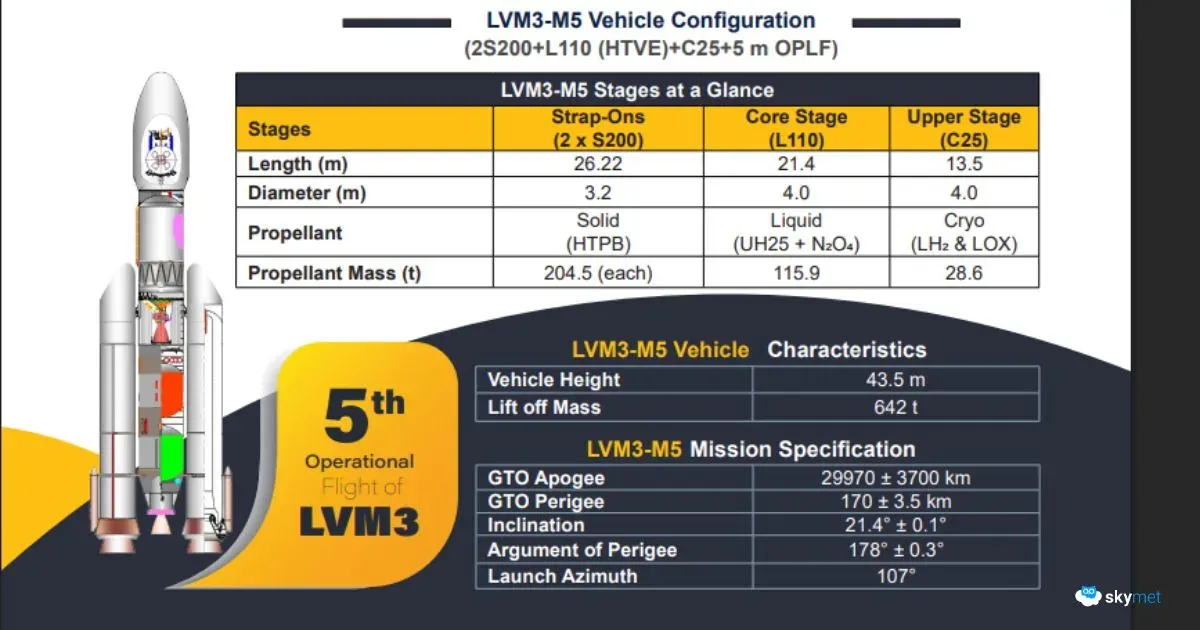
Courtesy: www.isro.gov.in
What sets this vehicle apart is that all major systems, including the once internationally embargoed cryogenic technology, were designed and built in India. For the CMS-03 flight, ISRO demonstrated another leap: for the first time, they reignited the C25 cryogenic engine in orbit, enabling future missions with complex multi-orbit deployments.
Why the ‘Bahubali’ Matters—The Story Behind the Science
LVM3’s importance transcends mere numbers. Until now, India’s weightiest satellites had to hitch rides on foreign rockets, a costly arrangement limiting autonomy and flexibility. By successfully launching CMS-03, LVM3 closes that gap, giving India independent access to space for even the heaviest, most security-critical payloads.
Advertisement
This capability is not just national pride—it’s a masterclass in applied physics and engineering:
- Solid, liquid, and cryogenic stages sequentially employ Newton’s Third Law, expelling exhaust at high velocity to generate upward thrust strong enough to lift 640 tonnes off Earth.
- Managing cryogenic fuels in deep space demands mastery over fluid dynamics and thermodynamics—skills that put India amongst elite spacefaring nations.
- The indigenous development of such advanced hardware is a powerful lesson in self-reliance (“Atmanirbhar Bharat”), underlining the profound impact of basic science and engineering on national progress and security.
Conclusion: A Foundation for the Future
With LVM3/Bahubali, India’s space sector leaps into a new era—strategically, scientifically, and economically. The launch of CMS-03 ensures the Navy’s communication supremacy over the vast Indian Ocean. More broadly, ISRO’s success amplifies India’s global presence in space, reduces foreign dependence, and offers cost-effective launch services to the world.
For students and enthusiasts, this is far more than just a rocket launch—it’s a testament to what sustained scientific inquiry, indigenous innovation, and unyielding teamwork can achieve. As ISRO prepares for crewed missions like Gaganyaan and even plans for a national space station, the Bahubali rocket stands as India’s passport to the stars—powerful, homegrown, and visionary.
Trending: Golden Supermoon of Novemeber 2025: Date, Visibility, and Viewing Tips for the Beaver Moon
Trending: Monsoon 2026: El Nino Chances Minimal
Skymet is India’s most accurate private weather forecasting and climate intelligence company, providing reliable weather data, monsoon updates, and agri-risk management solutions across the country.