

Delhi May Not Add Anymore Measurable Rainfall In September

Image: AI-Skymet
Delhi continues to observe dry weather conditions for the last twelve straight days. The base station Safdarjung has recorded 85 mm of rainfall so far in the month. The monthly average stands at 128 mm. At best, the capital city may add traces of rainfall today and tomorrow, marking the end of monsoon for Delhi. In the absence of clouds and rains, the mercury breached the 36°C mark for the second consecutive day. Today, the maximum temperature may increase further, reaching close to 37°C.
Advertisement
It is quite normal for any station to see a rise in mercury levels after the withdrawal of monsoon. A drop in humidity and the changeover to drier winds lead to an increase in temperatures. The temperatures over West Rajasthan, where the monsoon stands withdrawn, will rise to nearly 40°C in the next two weeks. The heat will get advected and impact Delhi as well during the remaining days of September. Yesterday, the maximum of 36.3°C was the highest of this month so far. In the last 10 years, Delhi invariably exceeded a maximum temperature of 37°C in September, except in 2018 and 2021, when the mercury got arrested at 35.7°C and 36.2°C, respectively. The maximum temperature had crossed 40°C in 2023 and breached 37°C last year. The highest-ever temperature of 40.6°C was recorded on 16 Sep 1938.
Advertisement
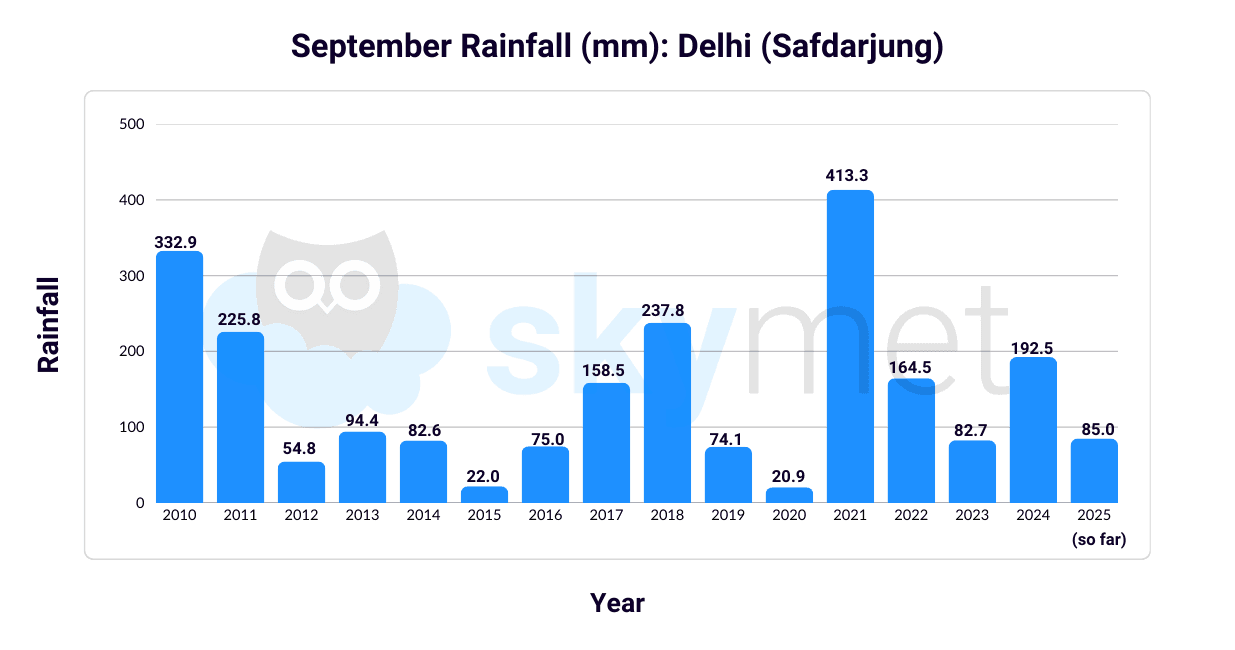
Monsoon is on the verge of withdrawal from Delhi. After tomorrow’s ‘touch and go’ situation, the monsoon will easily retreat from the national capital. It may formally be announced anytime around 20–21 September 2025. This could be the earliest withdrawal in the last 15 years. Last year, the monsoon withdrew on 02 October. Otherwise, the retreat invariably extended to the fag end of September or the first week of October. Since 2010, the latest monsoon withdrawal from Delhi was on 17 Oct 2013. For the record, the northeast monsoon that year set in on 22 October 2013, nearly coinciding with the complete southwest monsoon withdrawal from the country.


