Rain Deficit Karnataka Opts For Cloud Seeding: State Sanctions Two-Month Program

Key Takeaways:
- Karnataka has approved 60 days of cloud-seeding operations in drought-hit areas at an estimated cost of Rs 28 crore.
- Karnataka faces a rainfall shortfall of about 22%, with 29 of the state's 31 districts assessed as rain deficient.
- Cloud seeding requires suitable moisture-rich clouds and favourable atmospheric dynamics, making its success highly conditional.
- Weather conditions may remain unfavourable for widespread natural rain and frequent suitable cloud formation over Karnataka during the next one to two weeks.
- Forecast Validity: Next one to two weeks.
Advertisement
Karnataka government has given administrative approval for cloud-seeding operations for 60 days in drought-hit areas, at an estimated cost of Rs 28 crores. The operations will commence with immediate effect and spill into the month of October. The state had attempted such projects earlier also in 2003, 2009, 2017, 2019 and 2020. Scientific evaluations of Karnataka’s cloud-seeding experiments have shown a net positive increase in localized rainfall, but subject to atmospheric dynamics. Cloud seeding is a valuable tool for drought mitigation, but its success is highly variable and conditional. Talking about cloud seeding and its efficacy, the past record vindicates that Glaciogenic seeding (targeting cold clouds) outperformed Hygroscopic seeding (targeting warm clouds).
Advertisement
The state of Karnataka has a shortfall of about 22% rainfall between 01st June and 24th August 2026. South Interior Karnataka and Coastal Karnataka have a deficiency of 24% seasonal rainfall each. North Interior Karnataka is a shade better with a shortfall of 15% rainfall. Out of the four homogeneous regions, the South Peninsula has the second-highest shortfall of 22%, and in that, the state of Andhra Pradesh is the worst performer with an overall shortfall of 39% seasonal rainfall. In Karnataka, out of 31 districts, 29 of them have been assessed as ‘rain deficit’.
Artificial rain is dependent on the state of the atmosphere, which remains highly dynamic. The availability of suitable clouds is the first and foremost requirement. One needs tall clouds with sufficient density of water droplets, which may be of small size. Natural rain occurs from clouds that contain bigger drops. When the drops are big and clouds are thick in a deep layer, it rains naturally and the seeding effort becomes a near waste.
Those clouds having small drops do not initiate collision, and therefore, the coalescence process does not grow, and hence the tiny drops evaporate before reaching the ground. So, if clouds are very shallow and dry, even the seeding is not effective. Seeding is done by selective condensation and judicious choice of suitable clouds with favourable dynamic atmospheric conditions. The worthy clouds for seeding are either the vertically growing cumulus clouds or thick sheets of medium clouds having sufficient moisture through a deep layer.
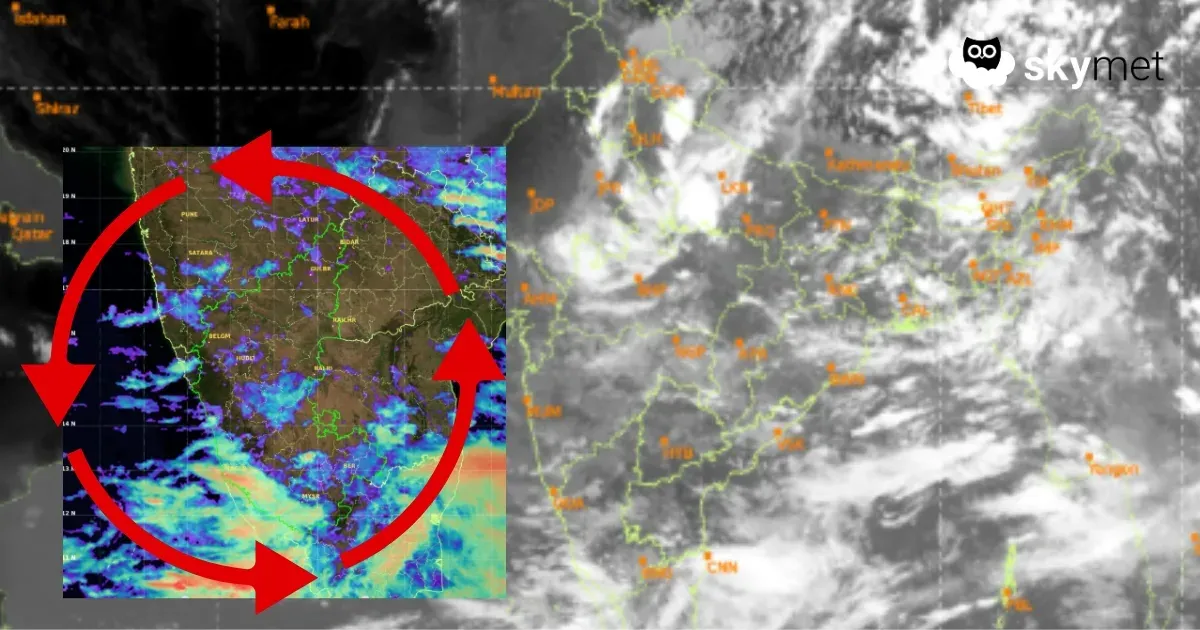
The meteorological conditions are not favourable for any widespread natural rains over the South Peninsula in general, and this includes the state of Karnataka. Also, it will be a tough call to find suitable clouds more frequently during the next one week or two. The northern half of the state remains more vulnerable to dehydrated atmospheric conditions. The effectiveness of ‘cloud seeding’ has always remained a contentious issue and still continues to be a subject of ongoing research and debate.
Trending: