Dry Winter in Western Himalayas; Drought-Like Conditions Amid Prolonged Snowfall Absence

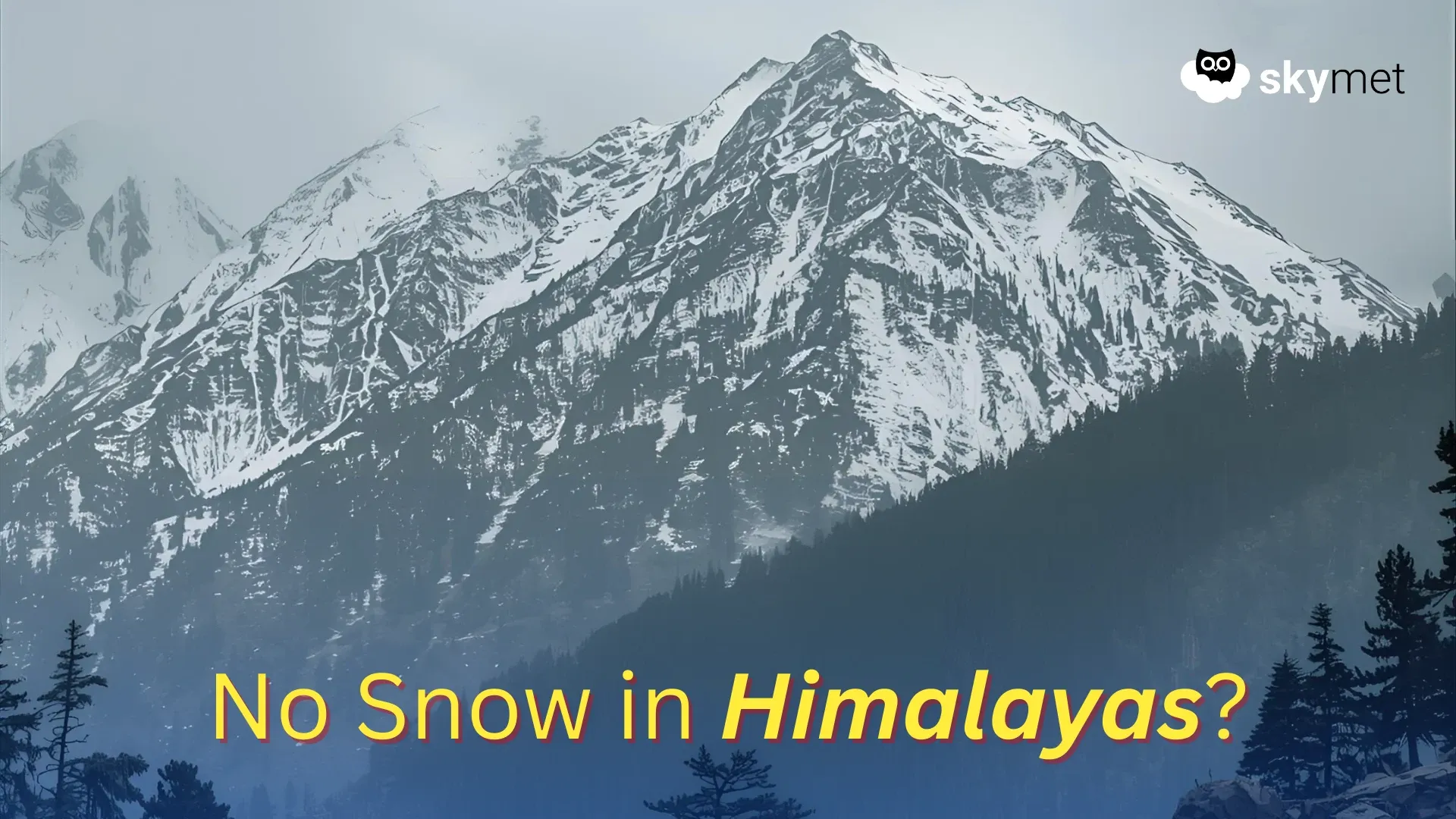
Image: AI-Skymet
Key Takeaways
- The Western Himalayas are witnessing drought-like conditions due to prolonged absence of rain and snowfall.
- Rising temperatures are preventing snow accumulation and accelerating surface melting.
- Reduced snowfall is impacting rivers, agriculture, horticulture, and winter tourism.
- Continued dry conditions pose long-term risks to glaciers, ecosystems, and downstream water security.
The Western Himalayan region is currently facing drought-like conditions, with a prolonged absence of rain and snowfall raising serious concerns. The first and only significant spell of rain and snowfall for the season occurred on October 6. Since then, weather conditions across the hills have remained largely dry, leaving vast stretches of the Western Himalayas unusually barren. Areas that typically remain blanketed in snow during winter are instead witnessing exposed slopes and brown landscapes.
Advertisement
Advertisement
One of the key factors behind this alarming situation is rising temperatures, which are preventing snow from sustaining itself for long durations. In the absence of frequent snowfall events, seasonal snow cover has failed to accumulate, accelerating surface melting and leaving the mountains increasingly vulnerable.
Climatologically, Western Disturbances begin affecting the Western Himalayas by mid-October, bringing rain and snowfall during November. Typically, one or two intense Western Disturbances deliver moderate to heavy snowfall in December, with their frequency increasing further. On average, three to four active Western Disturbances impact the region during December and January, resulting in widespread and heavy snowfall.
However, this season has defied the norm. November and the first half of December have passed with almost no significant weather activity. A similar dry pattern was observed in 2024 as well. As per current forecasts, no major Western Disturbance is expected to approach the Western Himalayan region until the end of December. An active Western Disturbance is likely around December 20 and 21, but its impact is expected to remain largely confined to Jammu & Kashmir and Ladakh, with only isolated pockets of Himachal Pradesh receiving precipitation. Uttarakhand is likely to remain completely dry.
The prolonged dry spell is already reflected in reduced water flow in rivers originating from the glaciers of the Western Himalayas. The lack of rain and snowfall is adversely affecting agriculture and horticulture, particularly apple orchards, which depend heavily on adequate winter chilling and snow cover.
Tourism has also taken a hit, as popular hill stations and skiing resorts remain devoid of tourists due to the absence of snowfall. Winter tourism, a major source of livelihood for local communities, is facing significant losses.
More worryingly, glaciers continue to melt, and the absence of fresh snowfall is failing to replenish them. This poses a long-term threat not only to the fragile Himalayan ecosystem but also to millions of people living downstream who depend on these glaciers for sustained water supply.
The ongoing lack of rain and snowfall is therefore a matter of serious concern—for residents of the hills as well as for populations in the plains who rely on Himalayan rivers for agriculture, drinking water, and overall ecological balance.