Typical Winter Fog Give Amiss: Delhi Awaits Foggy Days

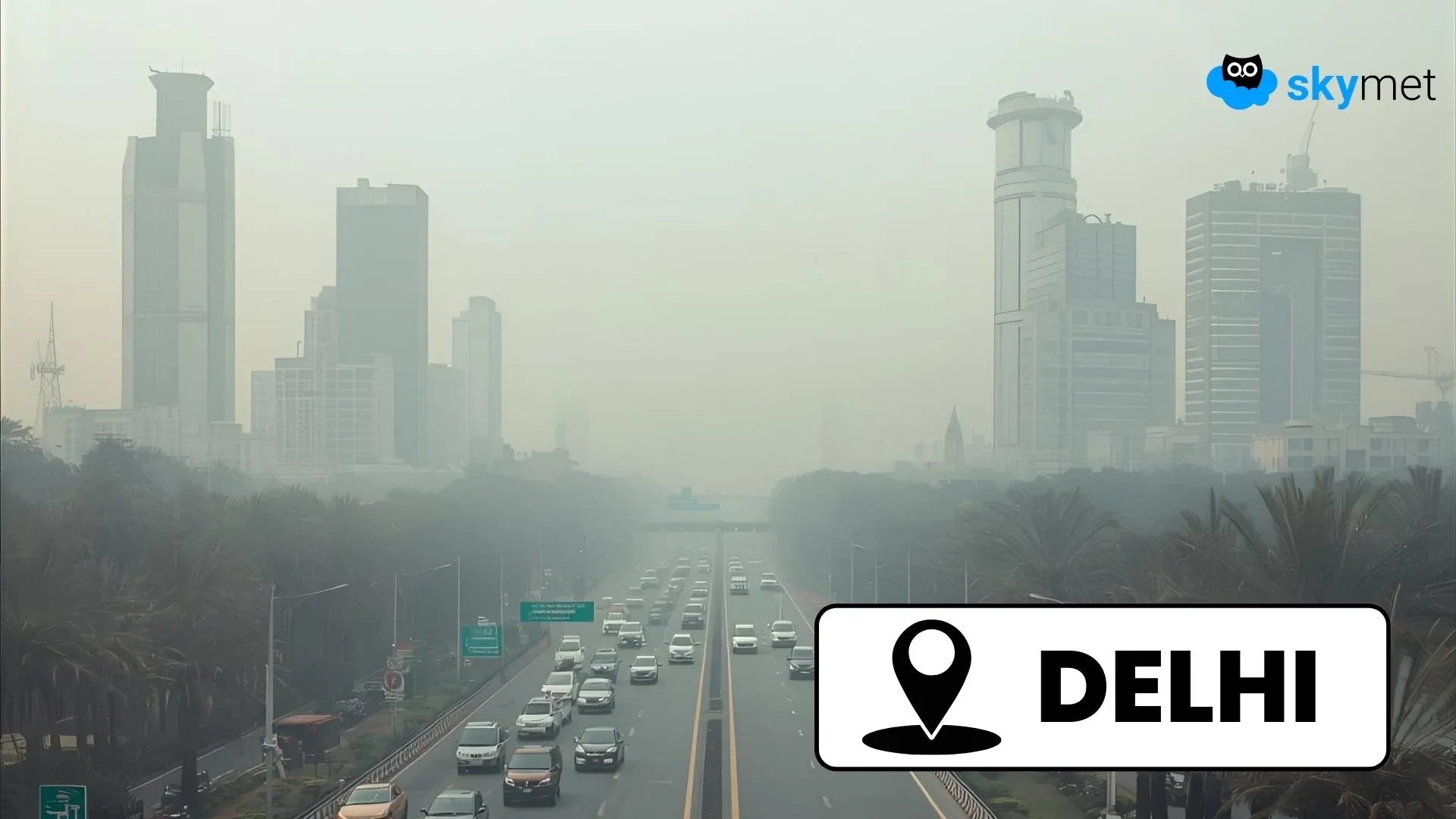
Image: AI-Skymet
Key Takeaways
- Delhi has yet to witness typical winter fog; recent visibility dips are due to smog, not fog formation.
- True winter fog requires high humidity, low wind speed, and minimum temperatures around 8–10°C.
- Absence of western disturbances has kept Punjab, Haryana, and Delhi dry throughout November.
- The first significant fog spell for Delhi is likely only in the second half of December 2025.
Advertisement
Delhi continues to wait for typical winter fog that reduces visibility for both aviation and road commuting. Horizontal visibility needs to drop below 1000 metres for shallow fog and below 500 metres for moderate fog. Dense fog reduces visibility to under 100 metres. Visibility at Palam Airport has been dipping below 1000 metres occasionally. However, this dip is primarily due to layers of smog and pollution, which the national capital has been battling through most of November.
Advertisement
Delhi, on average, observes 12 foggy days in November. The count rises to 19 days in December and 21 days in January. While a drop in visibility below 1000 metres may technically indicate fog, typical winter fog is distinctly different from persistent smog. In earlier years, winter fog has disrupted operations in Delhi on several days in November.
Winter fog depends on favourable meteorological conditions. Three prominent parameters are high humidity, low wind speed, and a slightly chilled morning with minimum temperatures between 8°C and 10°C. Temperature is flexible, but wind and humidity are critical. Light low-level winds are essential, whereas completely calm winds can suppress fog formation. Relative humidity needs to exceed 90% and preferably approach 100%. Such conditions often align when an active western disturbance moves across the northern mountains, spilling over into the plains of Punjab, Haryana, and Delhi.
So far, no significant western disturbance has affected the northern region. Punjab and Haryana have remained largely dry in November, except for light rain during the first week. Delhi has not witnessed any winter-like activity. Nothing appears likely over the next 10 days. The first spell of distinctive winter fog for the national capital and its suburbs may roll over into the second half of December 2025.